Sand Dollar Sports Cozumel: Inside a Sustainable Dive Center in Mexico
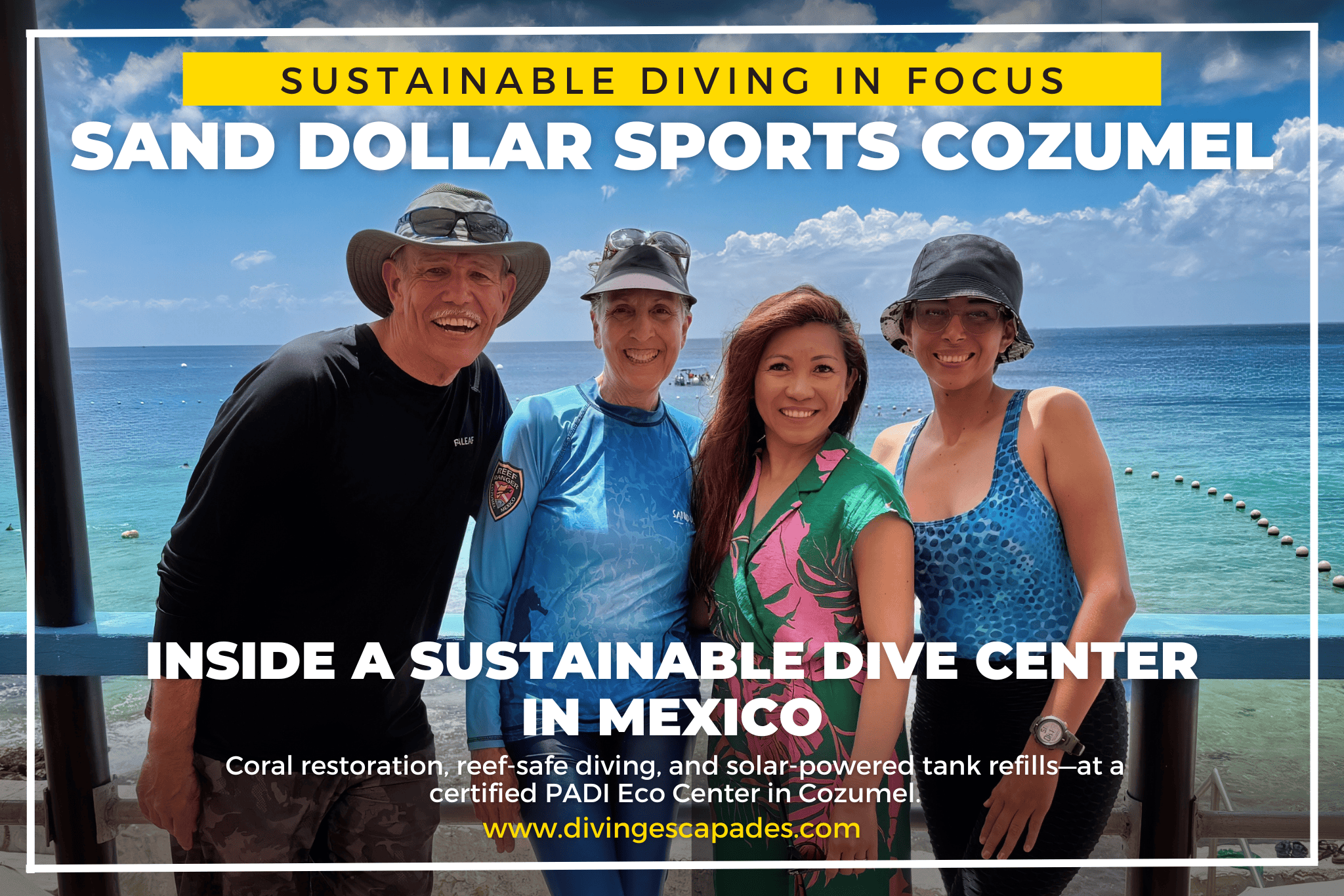

Looking for a dive centre in Cozumel that takes reef protection seriously?
Sand Dollar Sports caught my attention because conservation is part of how the team runs its diving, not simply something they mention on their website.
When I dived with Sand Dollar Sports in Cozumel in May 2025, I also spoke with Catherine Hoelzer and Cristina Mota about their reef protection and community projects.
This isn’t a sponsored post. I wanted to share what I actually noticed during my visit, alongside what Catherine and Cristina explained to me.
If choosing a responsible dive operator matters to you, here’s what I learned. Let’s dive in!
A Dive Center With Over 40 Years of Ocean Advocacy
Sand Dollar Sports has operated in Cozumel for more than 40 years. I was interested in how its approach to reef conservation developed over that time.
The team has been involved in local reef protection for decades, including early efforts to establish the marine protected area.
Cristina told me that Sand Dollar Sports was among the dive centres advocating for the marine protected area. The centre also describes itself as a founding member of the 1996 marine park initiative.
Their house reef is close to the shore and is used for training as well as conservation activities. It’s a useful place to see some of the restoration work they describe.
Of course, booking a dive doesn’t automatically mean you’re restoring coral. What matters is how the centre manages its activities and involves divers in learning about reef protection.
Green Fins, Travelife & PADI Eco Center: More Than Just Badges
I noticed Green Fins posters around the dive centre. They reinforced the same things we heard during the briefing: watch your buoyancy, give marine life space and reduce unnecessary waste.
At the time of my visit, the team described its work with Travelife, Green Fins and Parley for the Oceans. Its website currently identifies Sand Dollar Sports as a PADI Eco Center and Green Fins Digital Member. Check the individual programmes for current status.
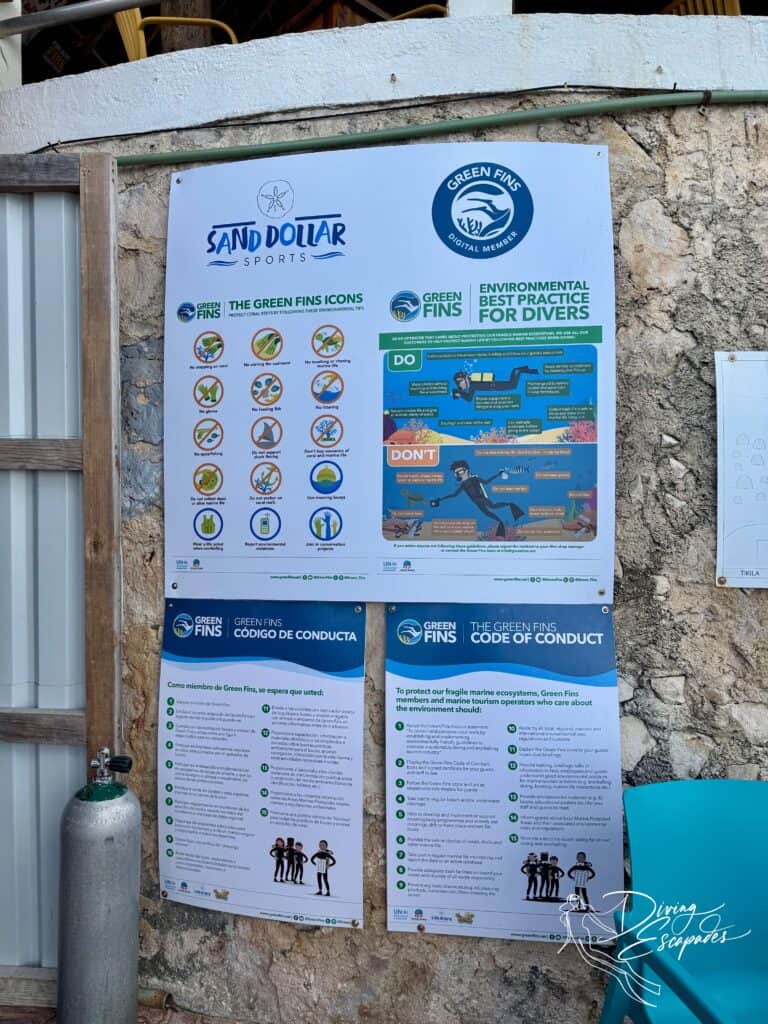
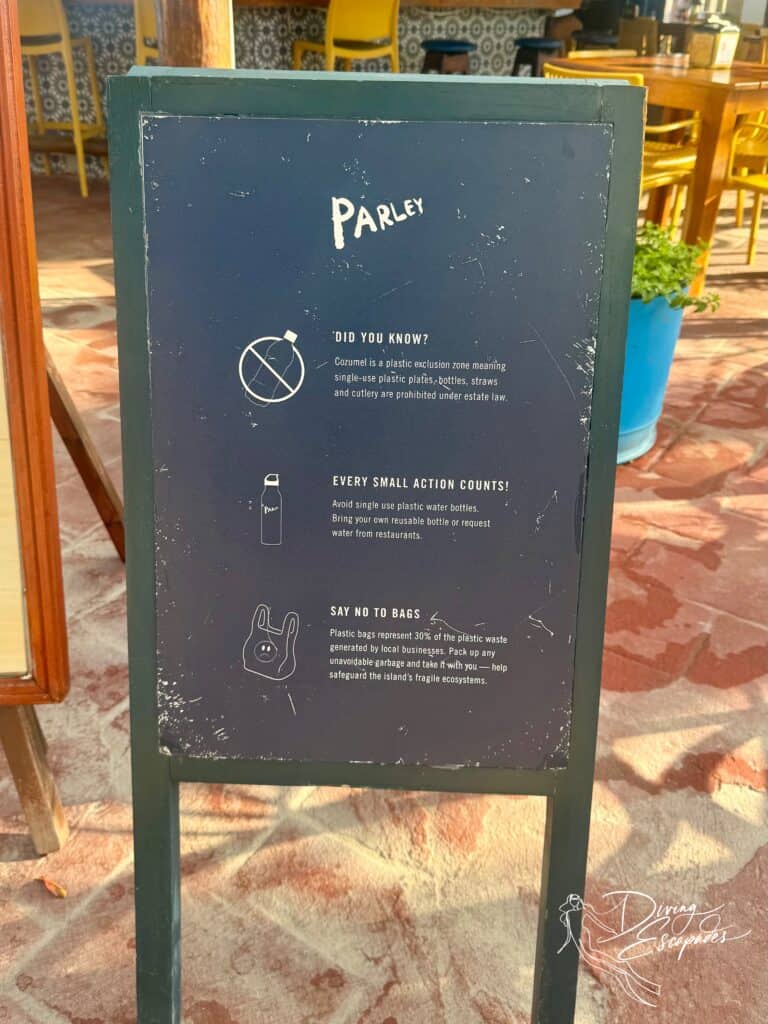
These programmes provide useful information when comparing operators, but I still look at the actual briefing, equipment practices and how staff behave on the boat.
So what does that mean for you as a diver?
On my trip, the crew used reusable cups rather than handing out plastic water bottles. The team also told me about its wider efforts to reduce single-use plastic. I haven’t independently verified the annual waste-saving figure.
They encouraged rash guards as a way to reduce sunscreen use in the water. It’s a practical habit I follow on dive trips too.
The centre also reports using solar panels to power its tank compressor. That’s a concrete operational detail I appreciated learning about, although I can’t verify any claim that it is the only operator doing so.
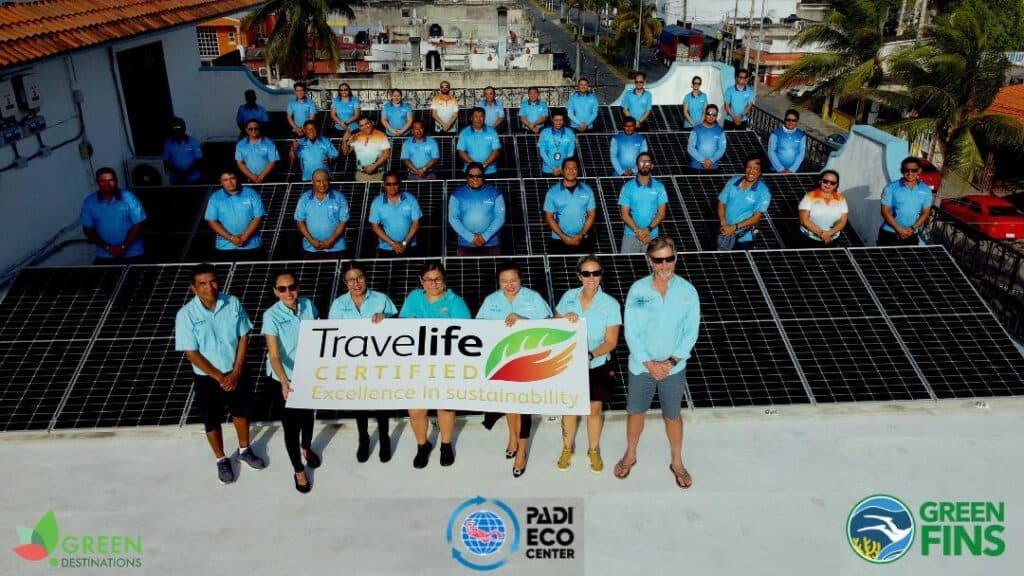
Solar power is one useful step, although it doesn’t make an entire dive operation carbon-free. I prefer seeing practical changes like this rather than relying on labels alone.
Coral Restoration: From Storm Damage to New Growth
Their house reef wasn’t always in great shape. After Hurricane Wilma devastated the area in 2005, much of the coral—once nicknamed “Coral Garden”—was destroyed.
The team became involved in efforts to support the reef’s recovery.
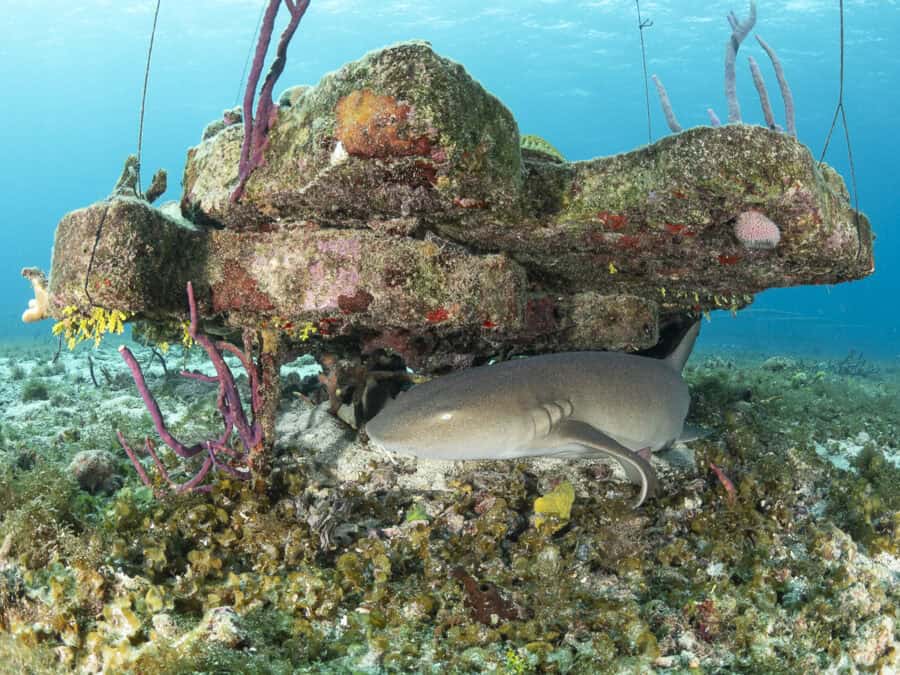
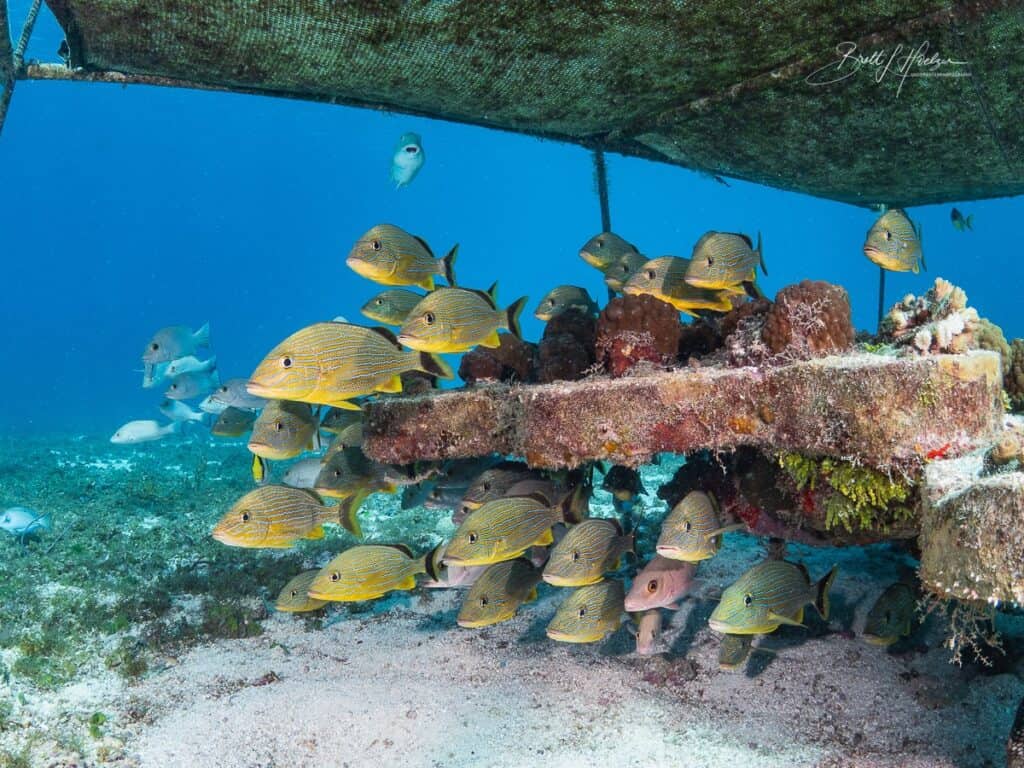
They invested in artificial reef structures like reef balls and platforms, and partnered with the Cozumel Coral Conservatory and Cozumel Coral Reef Restoration Program to bring new life to the reef.
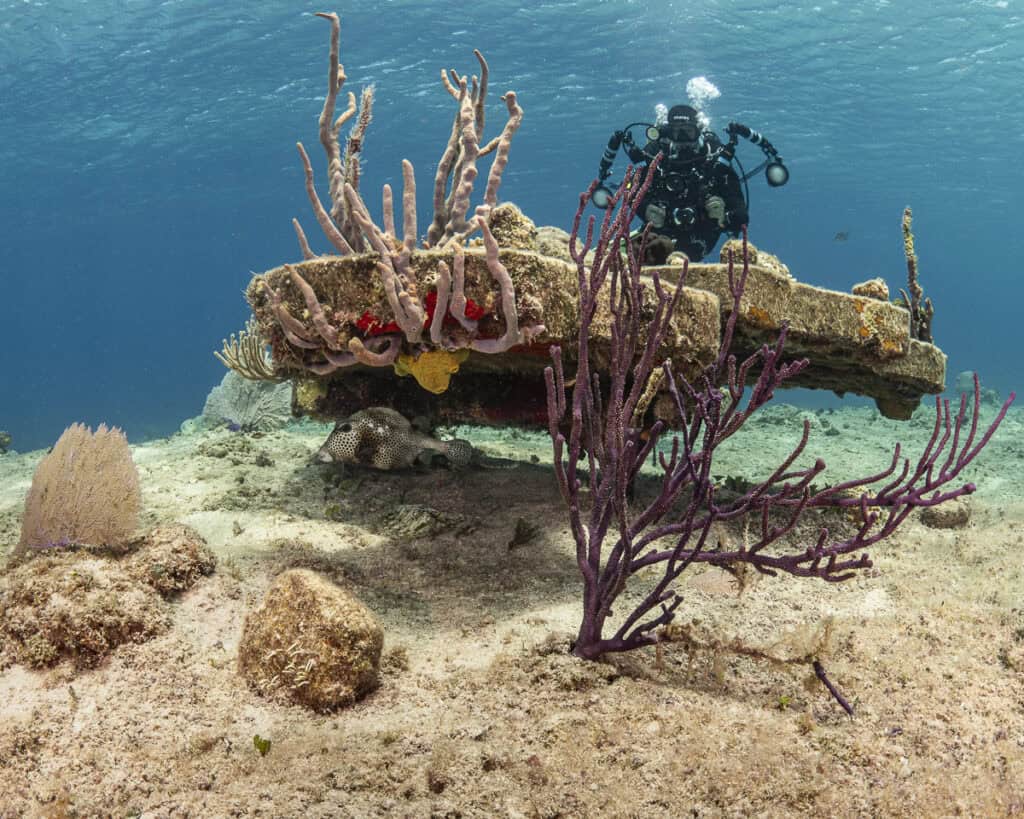
Cristina said that natural coral regrowth is an important sign of progress for their team. Reef recovery takes time, so I wouldn’t judge a project by a few photographs alone.
I liked that the conversation focused on long-term monitoring rather than quick results.
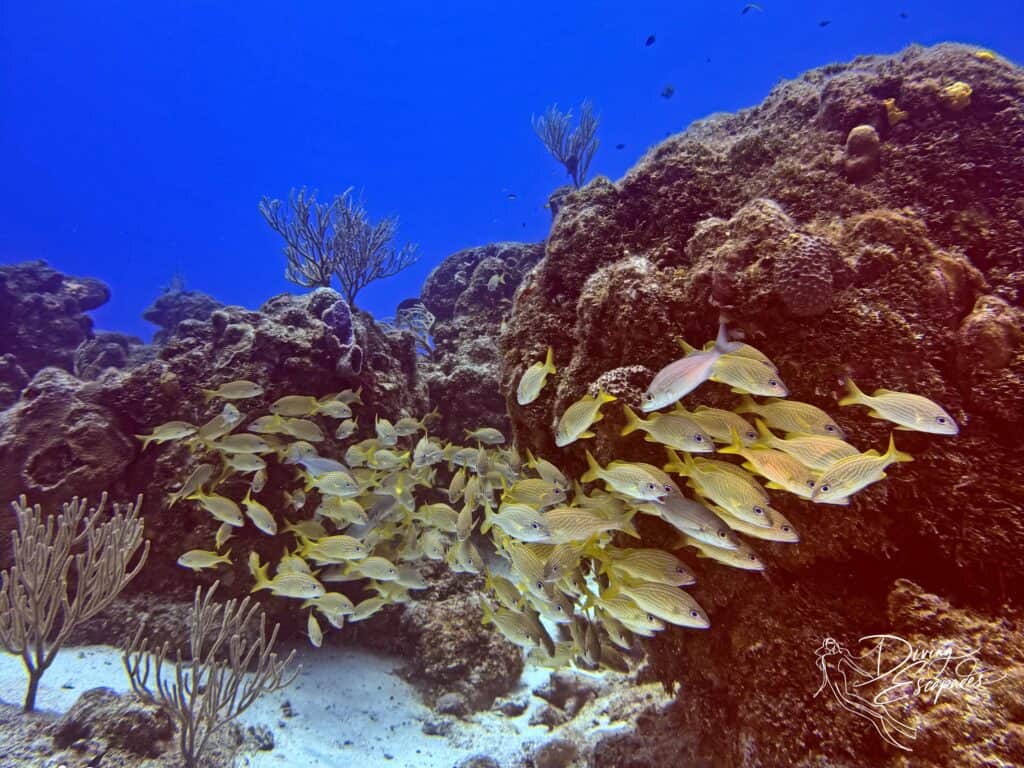
The team has documented fish using the artificial structures, alongside ongoing work to support coral growth.
Reef Ranger Program: Raising Future Ocean Advocates
Another project Catherine and Cristina spoke about was Reef Ranger, a marine conservation education programme for local children and families.
Originally launched in 2018 and rebooted after the pandemic, the program includes lectures, beach cleanups, snorkel outings, and fun activities like ecosystem-themed drawing sessions.
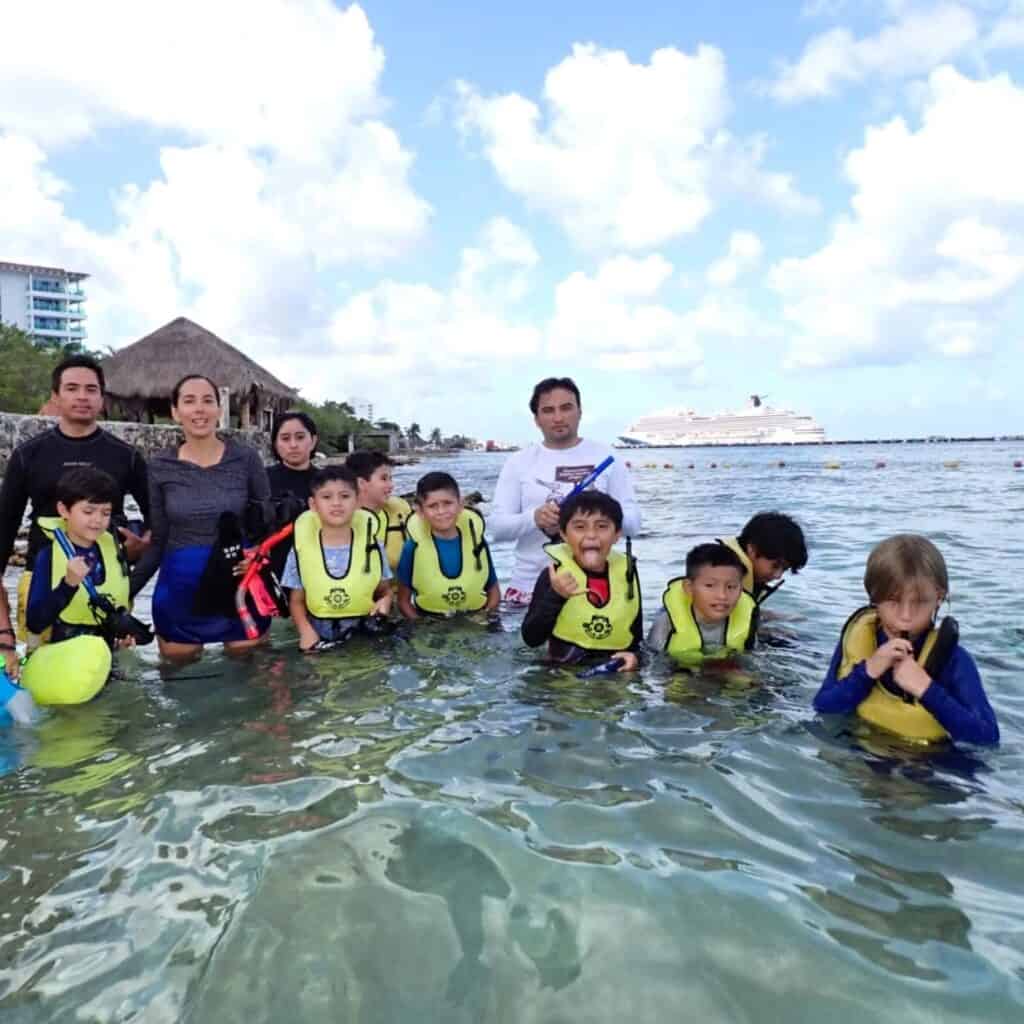
They told me that relatives of staff members joined activities in 2024, which made the programme feel closely connected to the local community.
They’ve also partnered with local schools, universities, and youth groups.
The team also described working with local students and interns on reef-friendly practices. That educational side is worth noting alongside the recreational diving.
Dive Briefings That Actually Brief You
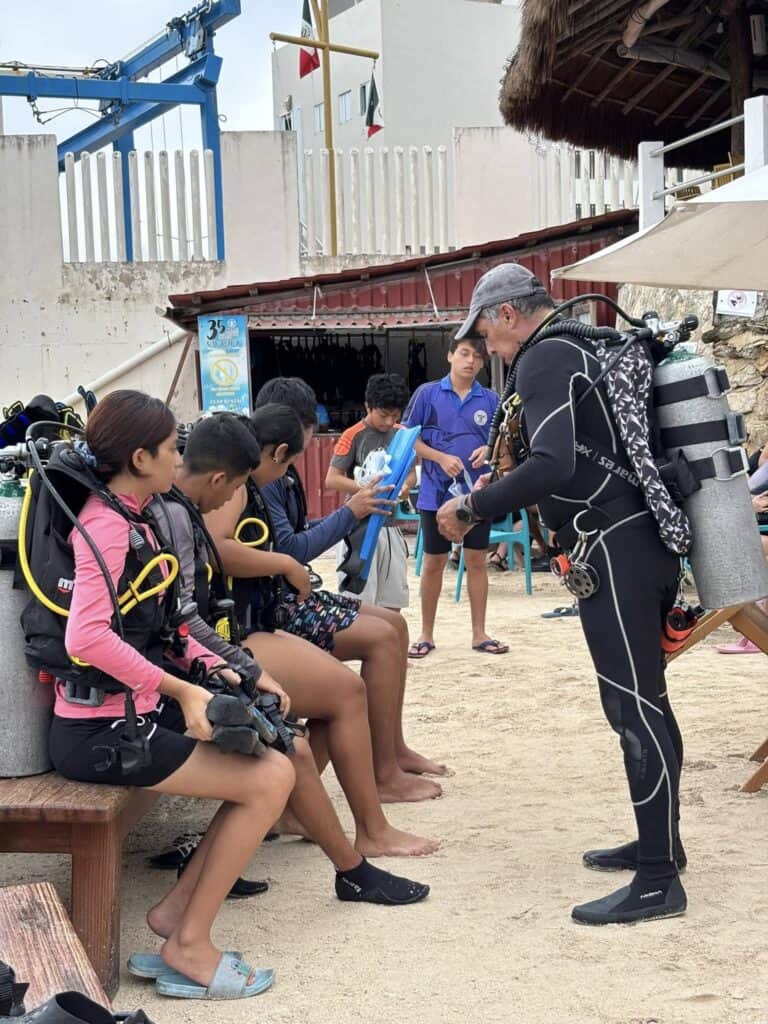
One of the things I pay attention to at any dive centre is the briefing. It tells me a lot about how the team approaches both safety and the reef.
At Sand Dollar Sports, the briefing covered the usual safety information and made time for reef etiquette, including buoyancy, not touching marine life and staying aware of our surroundings.
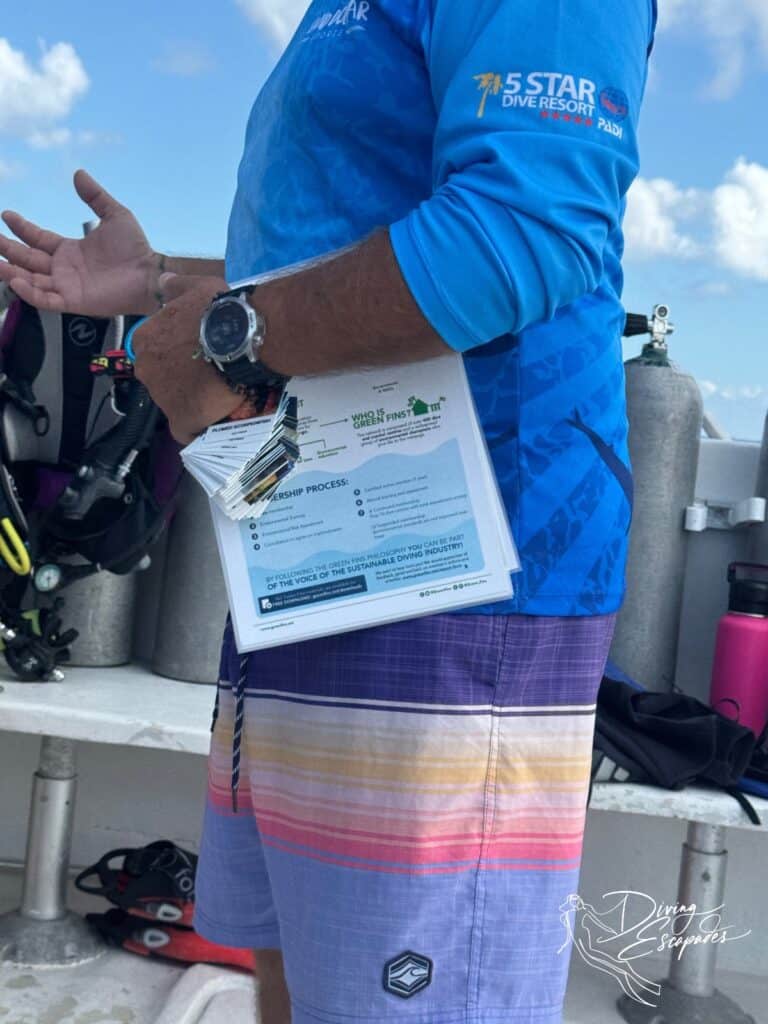
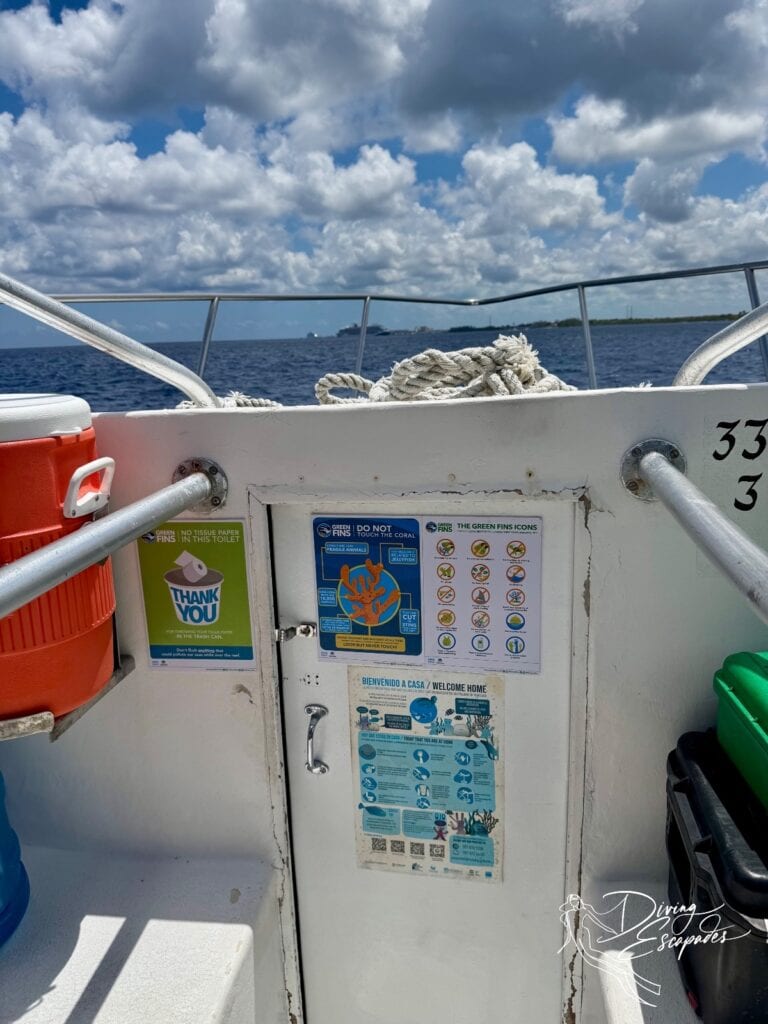
On our boat, the crew provided reusable cups. I also found the team approachable and professional throughout the dive.
What stood out to me was the consistency between the conservation information at the centre and what the crew actually did during our trip.
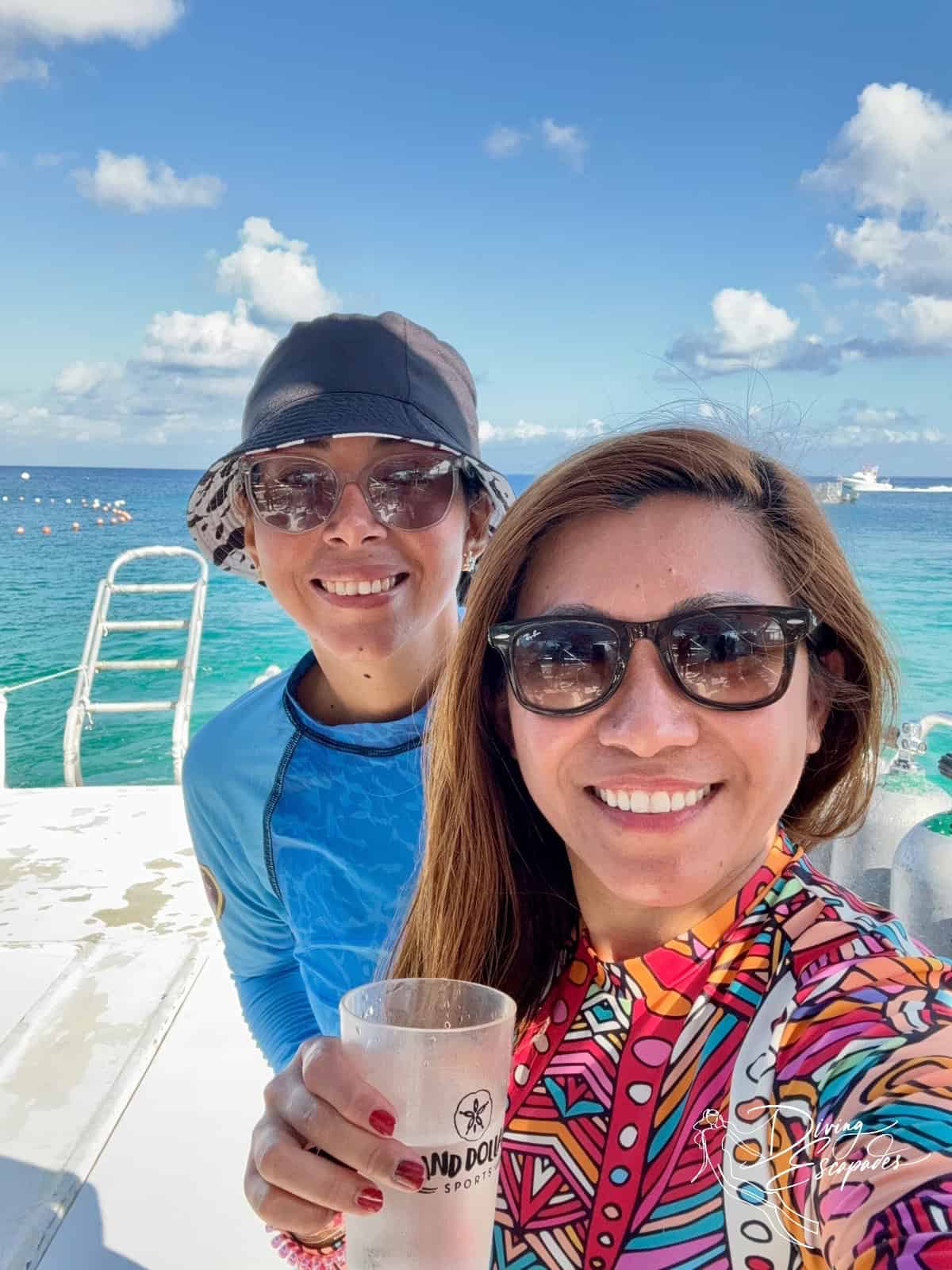
None of these steps is particularly complicated, which is part of why I think they’re worth noticing.
I enjoyed the diving, but I also appreciated being able to ask questions and see how the operation worked.
👉 Planning your own dive trip? Be sure to check out my full guide: Best Scuba Diving in Cozumel: A Quick, Eco-Friendly Dive Guide for Cruise Travelers—it covers top dive sites, what to expect, and how to dive sustainably.
Protecting Villa Blanca Reef: A Fight Worth Knowing About
When I interviewed Cristina and Catherine, they asked me to highlight the proposed cruise pier near Villa Blanca Reef. There has since been an important development.
The campaign is a good example of why local conservation work matters, even when visitors may never hear about it.
Update, November 2026: Mexico’s environmental authority closed the case for Cozumel’s proposed fourth cruise pier on 26 February 2026, after rejecting the project. A separate proposal to expand an existing pier was also refused in April 2026. That changes the situation described during my 2025 visit.
The concern centred on potential impacts to the reef habitat, marine species and access to this stretch of coastline.
Local organisations, researchers and residents had spent years documenting the reef and challenging the proposals.
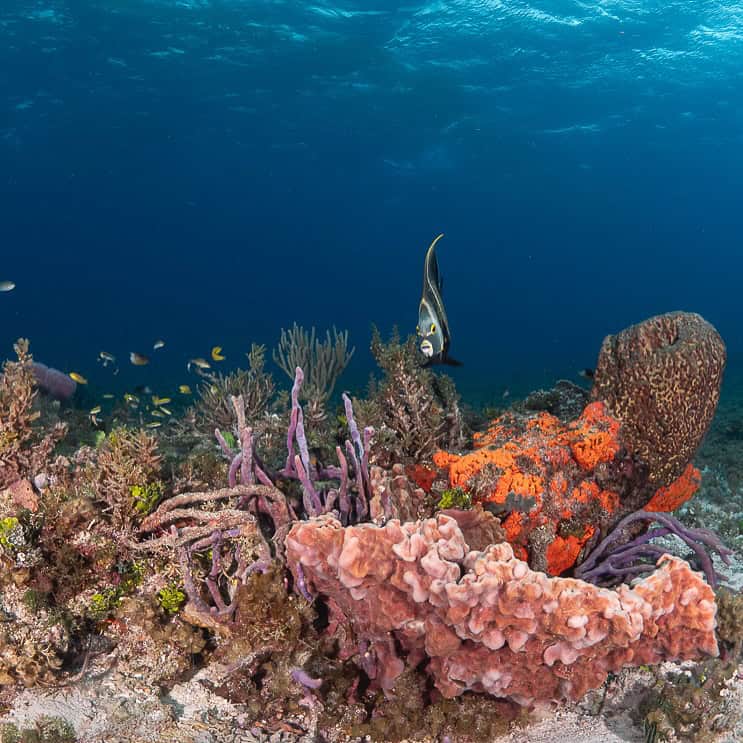
As part of the campaign, the team helped commission a marine biology report supported by people concerned about the reef.
The report was submitted to authorities to challenge aspects of the environmental impact assessment and argue for decisions grounded in reef science.
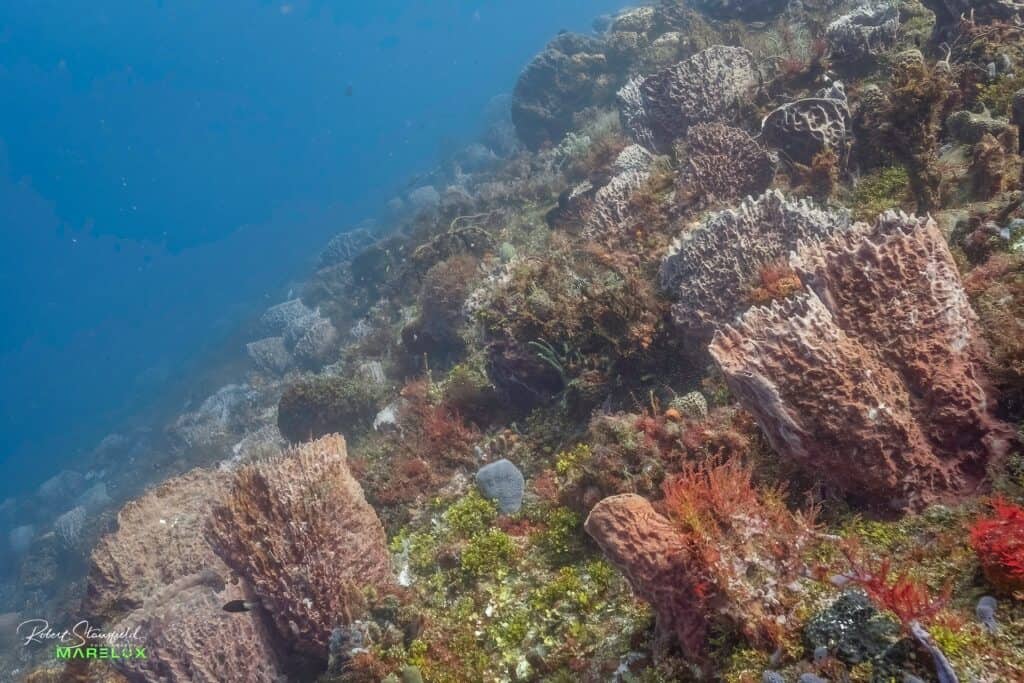
The rejection is welcome news for the people who worked to protect Villa Blanca Reef. It is still worth following local updates about future development proposals.
For me, the story is also about the role divers and local communities can play in speaking up for reef protection.
The campaign shows the value of collecting evidence, working with local organisations and giving coastal communities a say in decisions that affect their reefs.
The Wrap Up: Why I Recommend Sand Dollar Sports
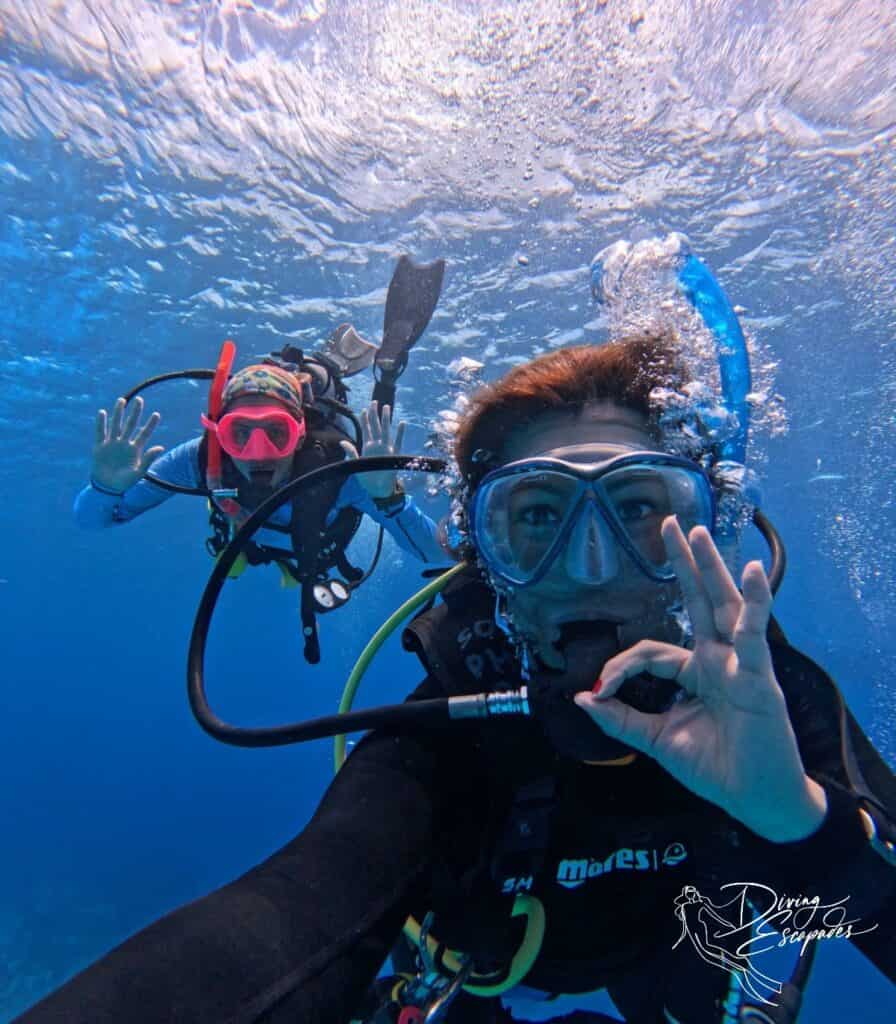
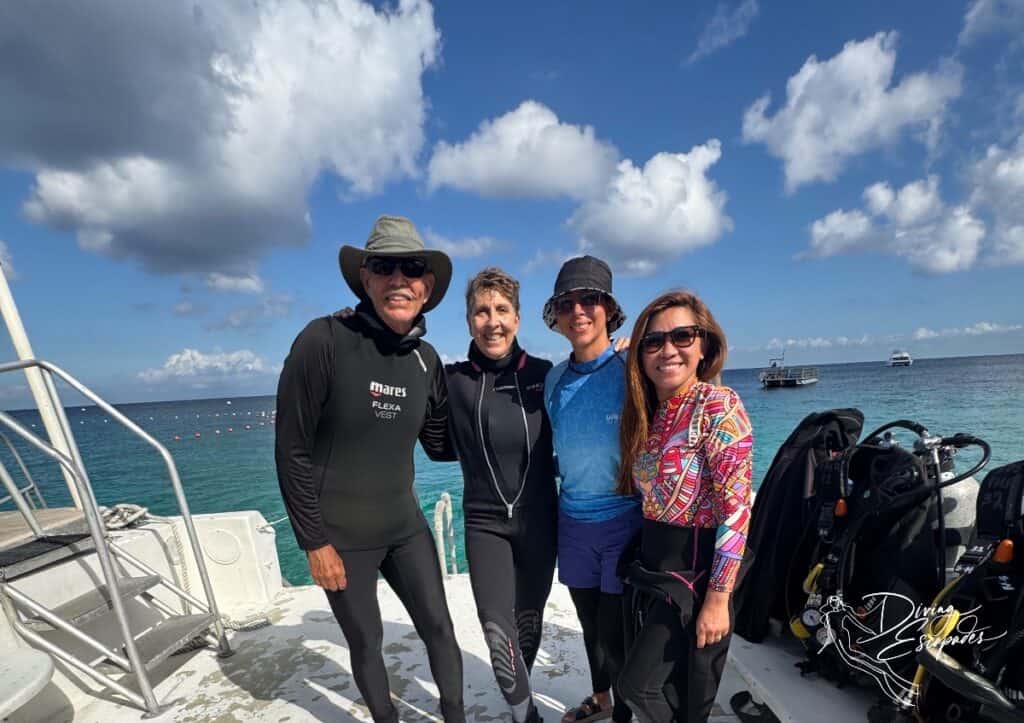
I’ve dived with operators in several countries, and what I remember about Sand Dollar Sports is how consistently the team brought reef care into our briefing and boat experience.
The posters were useful, but it was the everyday choices I saw that made more of an impression.
If you’re choosing a dive centre in Cozumel and want to ask meaningful questions about its environmental practices, Sand Dollar Sports is worth considering.
My advice is to look beyond a sustainability badge and pay attention to the briefing, waste practices and how guides treat the reef. Those details made this dive memorable for me.
👉 Want to know more about dive sites, what to expect, and how to make the most of your time underwater?
Don’t miss my full guide: Best Scuba Diving in Cozumel: A Quick, Eco-Friendly Dive Guide for Cruise Travelers
CONTACT SAND DOLLARS SPORTS COZUMEL:
Website: https://sanddollarsports.com/
Instagram: https://www.instagram.com/sanddollarsports/
Facebook: https://www.facebook.com/SandDollarSports/