Malapascua Diving: What You Need To Know and What To Expect
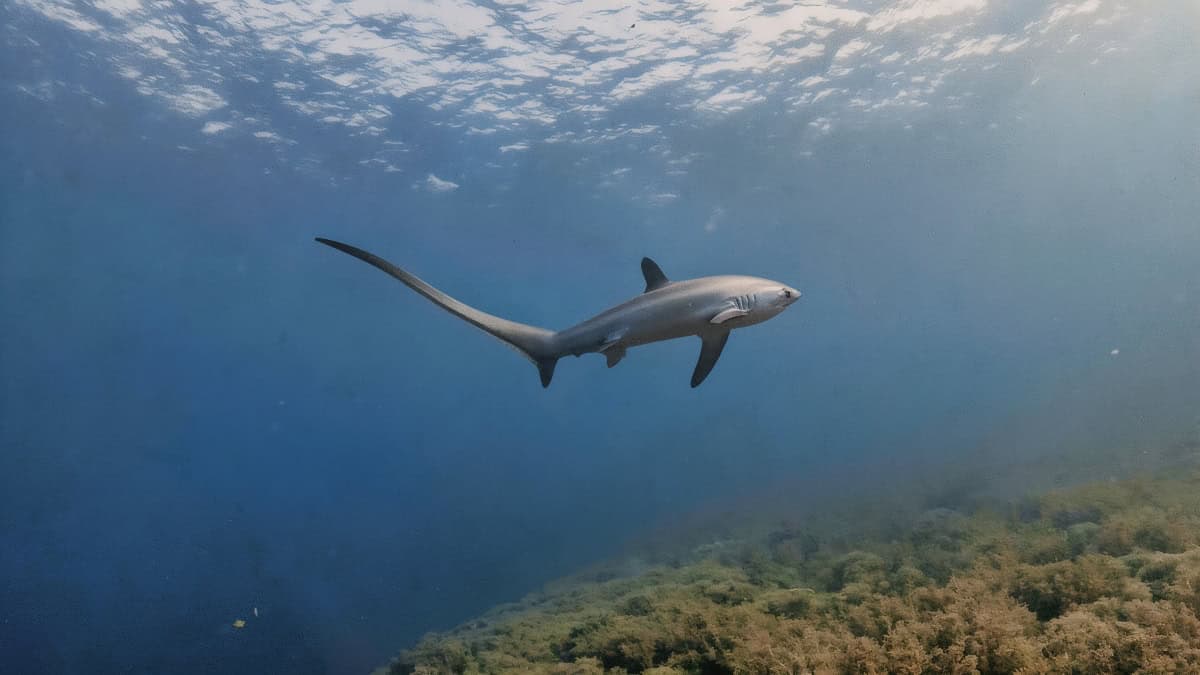

Malapascua diving is unlike anything else in the Philippines.
I visited in late March 2026 as the first stop of my Philippines dive circuit. The thresher sharks are real. So is the 4:30 AM alarm. I’d happily do both again.
In this guide, I’ll walk you through the diving, how the thresher shark experience actually works, the dive center I used and why I’d recommend them, plus the practical tips you need to plan your own trip. Let’s dive in!
Malapascua Diving Overview
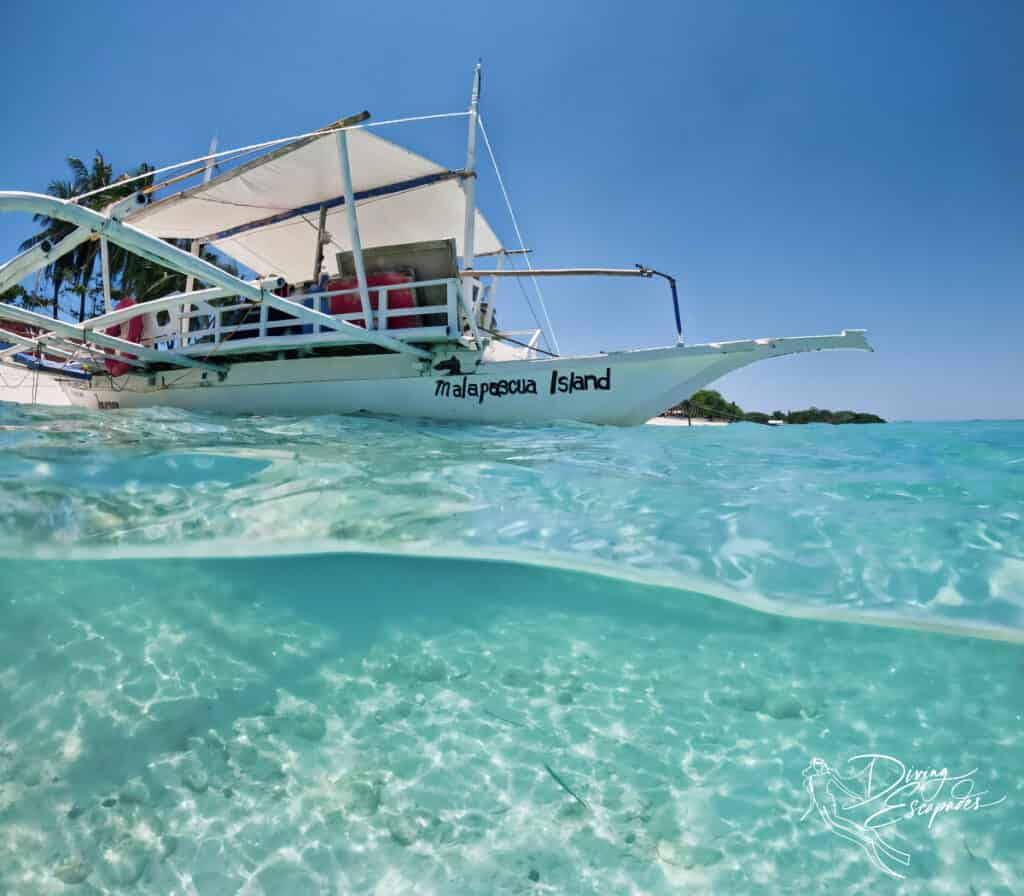
Malapascua is a small island in Cebu Province, Philippines about 30 to 45 minutes by boat from Maya Port in northern Cebu.
You can walk around the whole island in under an hour. What that small size means in practice is that everything is close, evenings are slow-paced, and mornings start very early because that’s how diving here works.
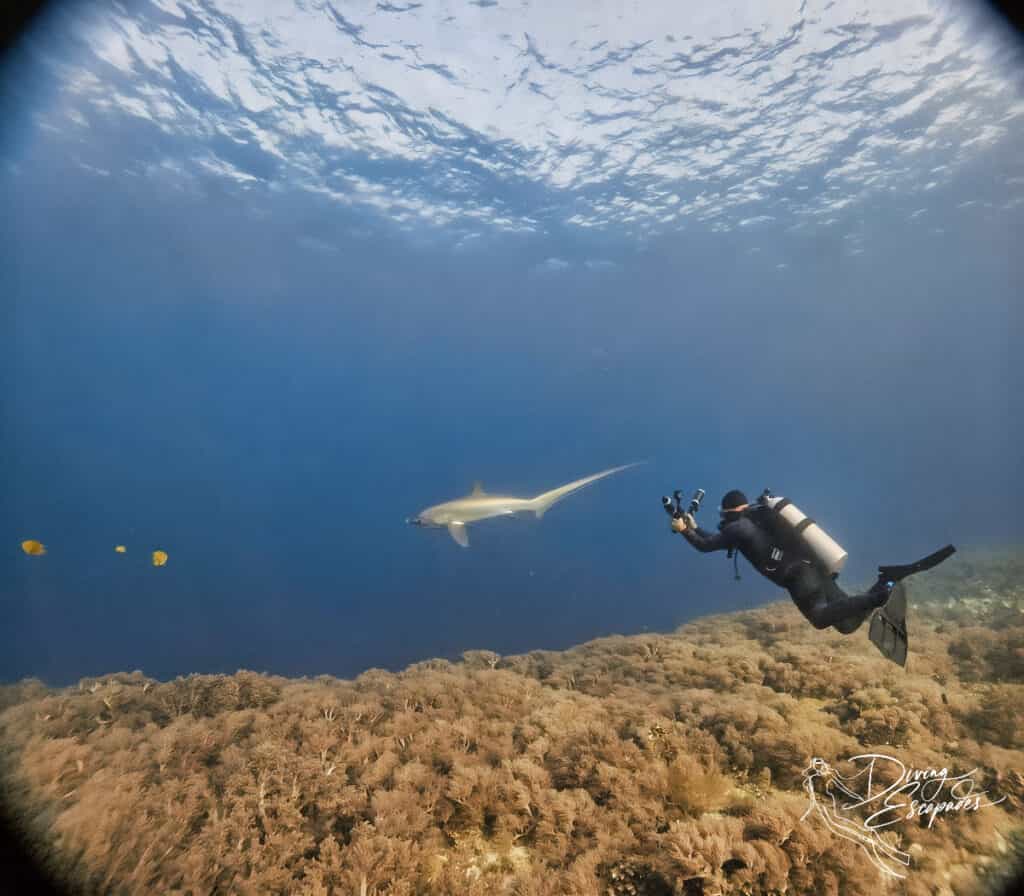
The island is best known for its thresher sharks. For years, divers headed to Monad Shoal to see them, but the sharks have since shifted their main cleaning station to nearby Kimud Shoal, about an hour by boat from Malapascua.
What makes Malapascua special is the reliability. It is one of the few places in the world where you have an excellent chance of seeing thresher sharks year-round, often on a daily basis.
But the diving doesn’t start and end with threshers. The waters around Malapascua are rich in macro life like frogfish, nudibranchs, octopus.
There are other strong dive sites worth building into your stay if you have four nights, which I recommend as a minimum.
My Experience
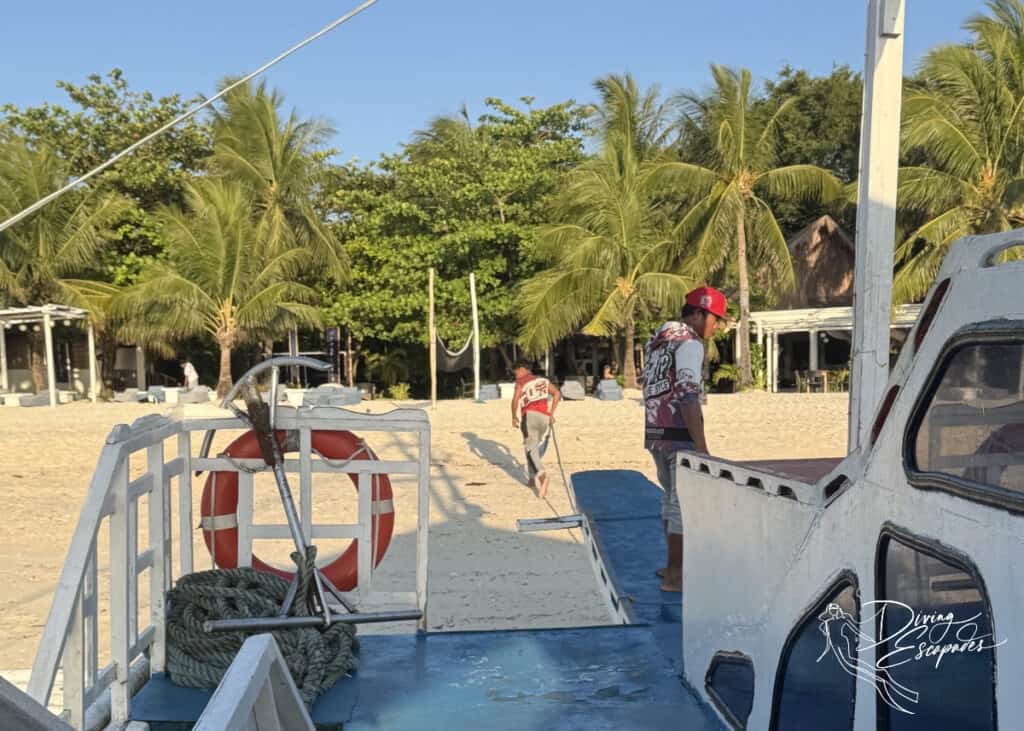
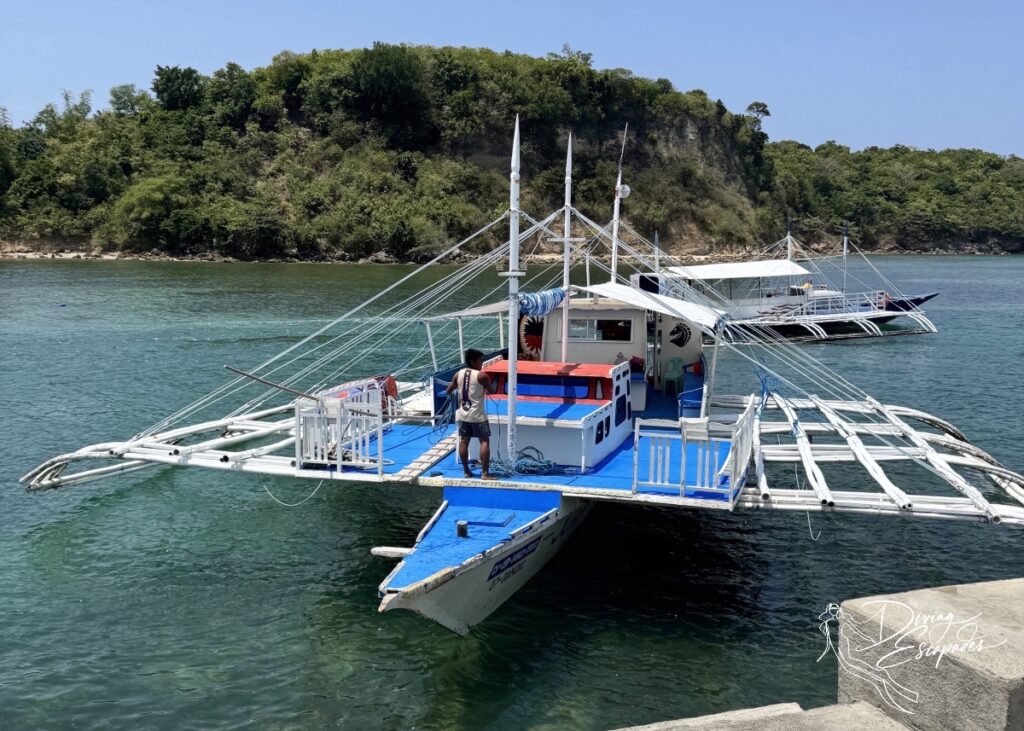
I arrived in Malapascua at around 6:30 AM after a very long journey, catching the tail end of sunrise on the boat crossing from Maya Port.
The check dive on Day 1 was not great. Visibility was about 1 metre and I quickly realised I was overweighted, which made the whole thing harder than it needed to be.
On Day 2, I adjusted my weight for the thresher shark dives and everything improved.
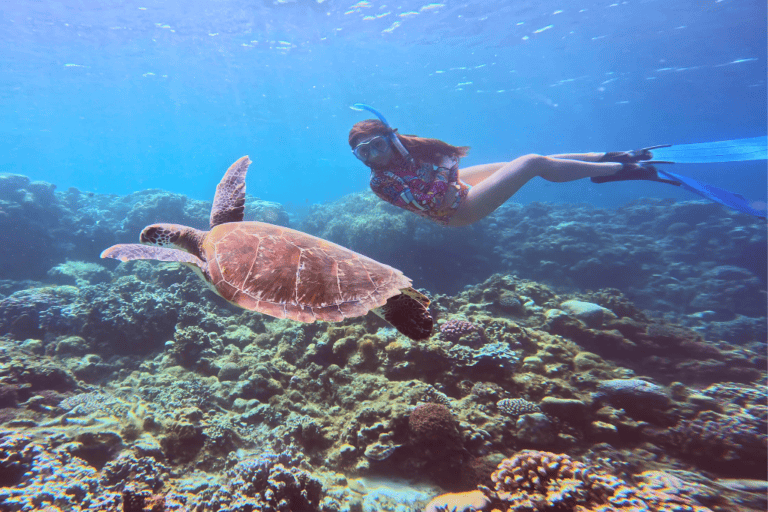
I also did a snorkeling island tour on the first morning, which turned out to be one of the highlights of the trip. Sometimes conditions on the surface are better than below, and this was one of those times.
A private boat with a guide who also acted as photographer, a captain, and an assistant, all for around 1,500 pesos (roughly €20) over three hours. Baby black tip reef sharks, Coral Garden, and several reef stops around the island. Really good value.
Why Dive Here
There is nowhere else in the world where you can reliably dive with thresher sharks. That’s not marketing language, it’s simply true.
The cleaning station at Kimud Shoal draws them in every morning. If seeing a thresher shark is on your diving bucket list, Malapascua is where you come.
Beyond threshers, the macro diving is genuinely good and the island itself is unpretentious and calm.
No cars, sandy paths between dive resorts, and a beach scene that winds down early because everyone’s diving at dawn.
What to Do Above Water
The island is small and simple, and that’s part of the appeal. Kalanggaman Island is a popular day trip. This is a white sandbar island with clear water, good for non-divers or as an add-on if you have an extra day.
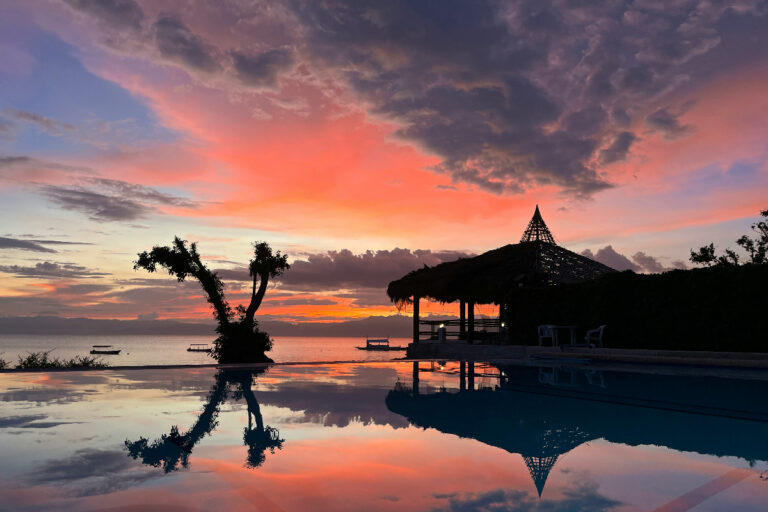
In the evenings, there’s a relaxed beach scene with barbecue, drinks, and occasional live music. This is not a nightlife destination, and that suits divers well.
Recommended Dive Center: Evolution Diving
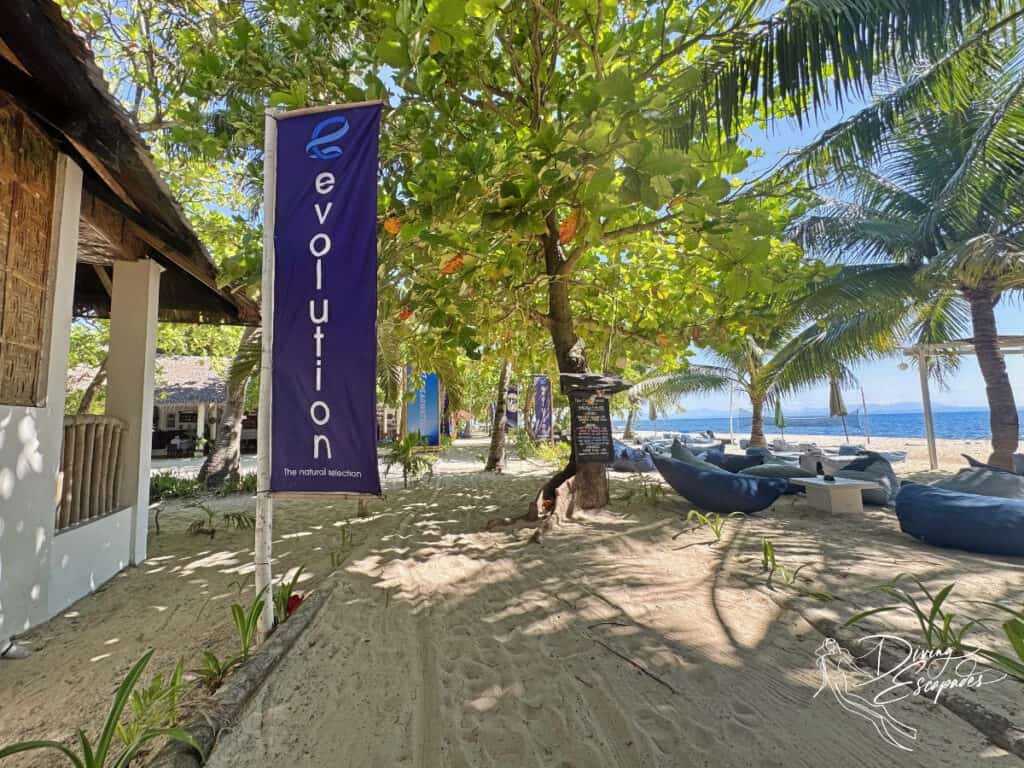
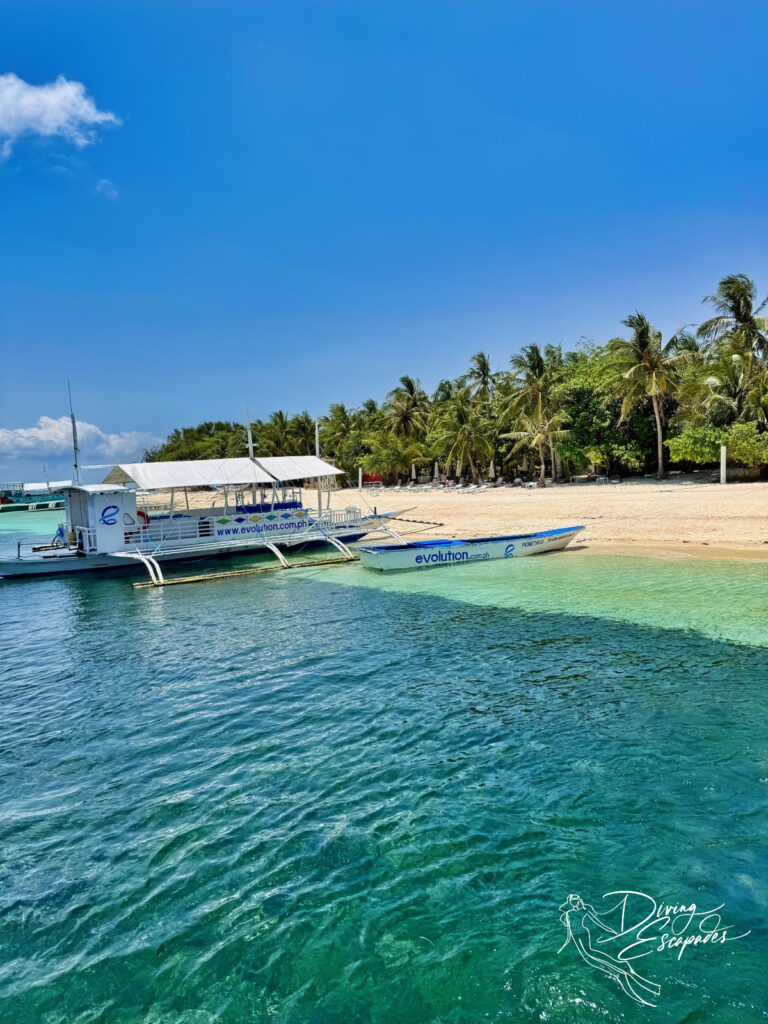
I booked my entire Malapascua experience through Evolution Diving — transfers, accommodation, and all dives.
I would do the same again without hesitation.
Evolution is one of the top 10 Green Fins accredited dive centers in the world. Small dive groups, clear briefings, smooth logistics from airport to boat, and a staff environment that tells you a lot about how well the place is run.
From the moment my driver Nick met me at Cebu Airport at 1:30 AM with a sign to the moment I stepped off the dive boat to find my breakfast already waiting, everything was handled.
One practical note: there’s a 5% surcharge for credit card payments. Bring pesos.
For the full picture on the team, operations, and what sets them apart, read my Evolution Diving Center review.
The Thresher Shark Dive: What to Expect
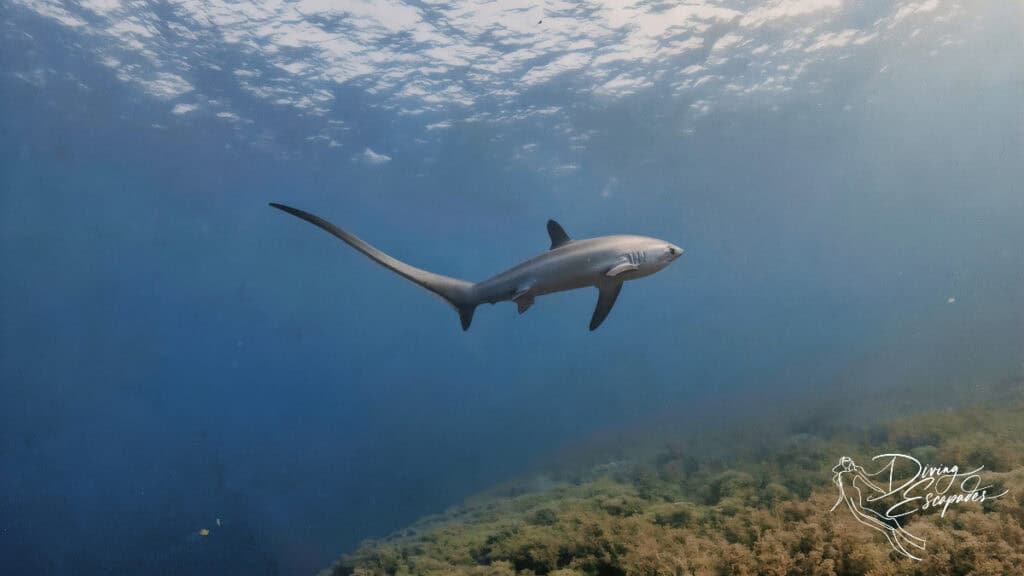
This is the dive you came for.
Kimud Shoal is a submerged atoll about an hour’s boat ride from Malapascua.
Note: Older guides and blog posts may refer to Monad Shoal as the main thresher shark dive site. While divers still visit Monad, thresher sharks are now most commonly seen at nearby Kimud Shoal.
Here’s how the morning actually went:
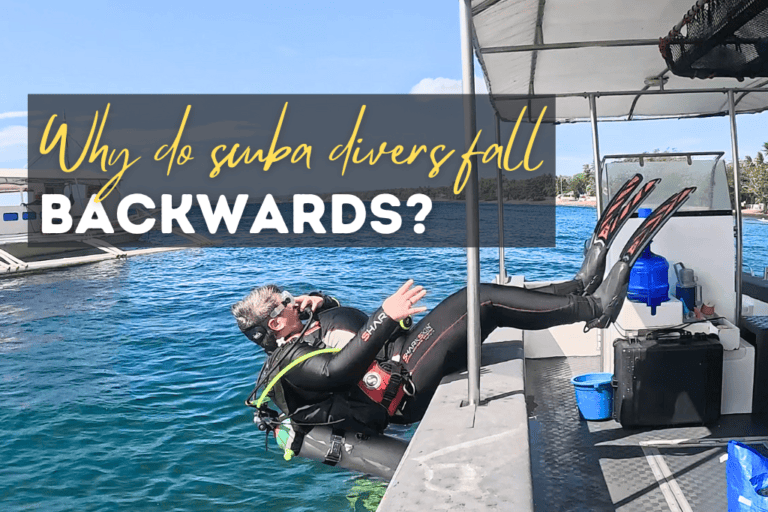
4:30 AM — Alarm. The roosters had already started at 3 AM, so it wasn’t a complete shock. Quick breakfast, I had a cereal bar and a cup of milk, then wetsuit on and water shoes, which are easier than flip-flops for boarding the tender boat (small outrigger boat).
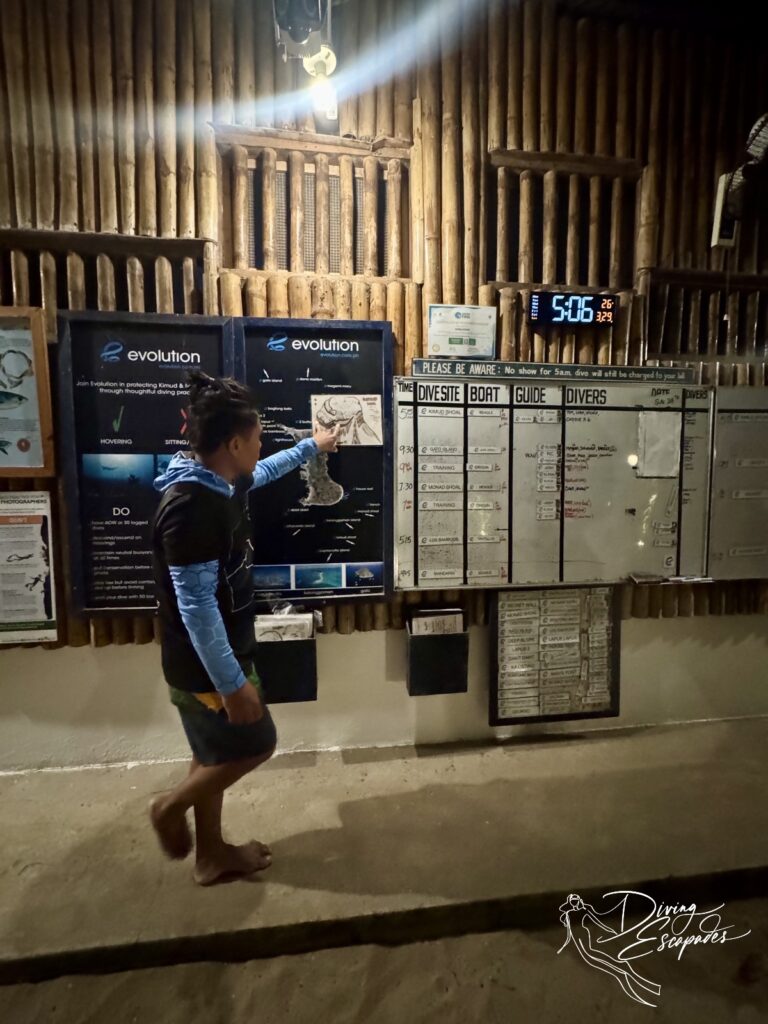
5:00 AM — Dive briefing at the reception area. The group was split across teams. I was in a group of three guests with a dive master (Ryan). Total on the boat: around nine guests plus five or six staff.
The briefing was clear and well-delivered: good buoyancy, no touching corals, watch out for hydroids and fire coral because they sting.
5:15 AM — Tender boat out to the Beagle. The main dive boat is moored offshore because the water near the beach is too shallow for it to come all the way in. The tender ride takes about five minutes. It was still dark.
Around 5:30 AM — Departure for Kimud Shoal. During the hour-long boat ride, the sun came up. I watched it rise (it looked like a fireball) and got it on camera.
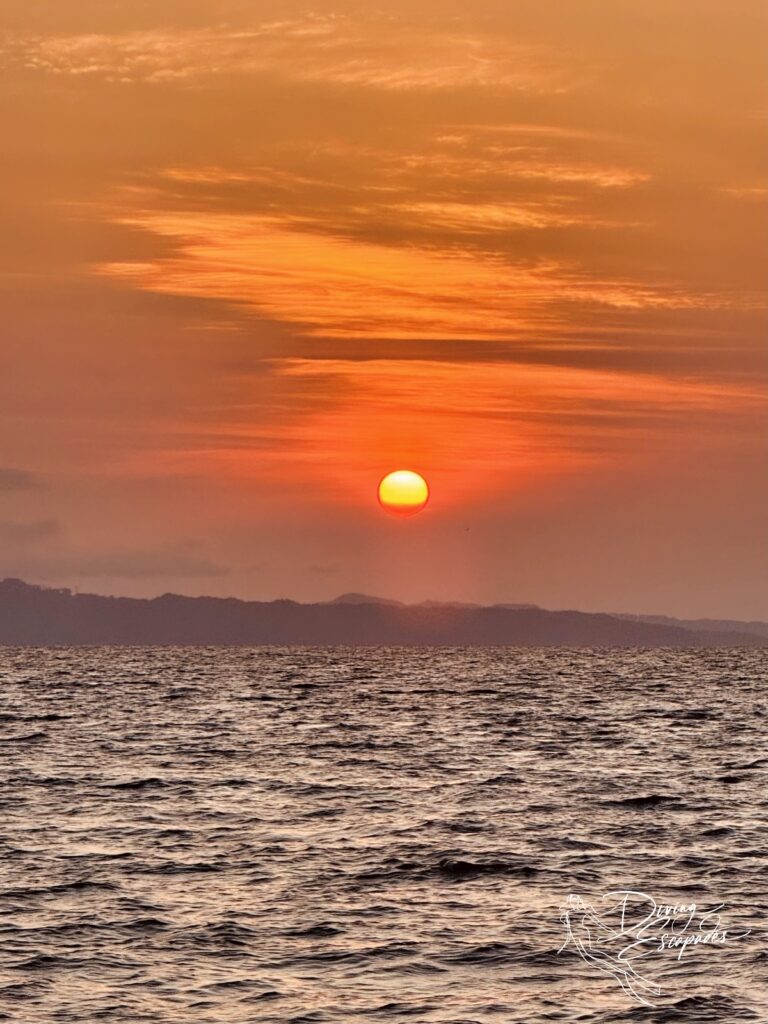
6:30 AM — Arrive at Kimud Shoal. Descend.
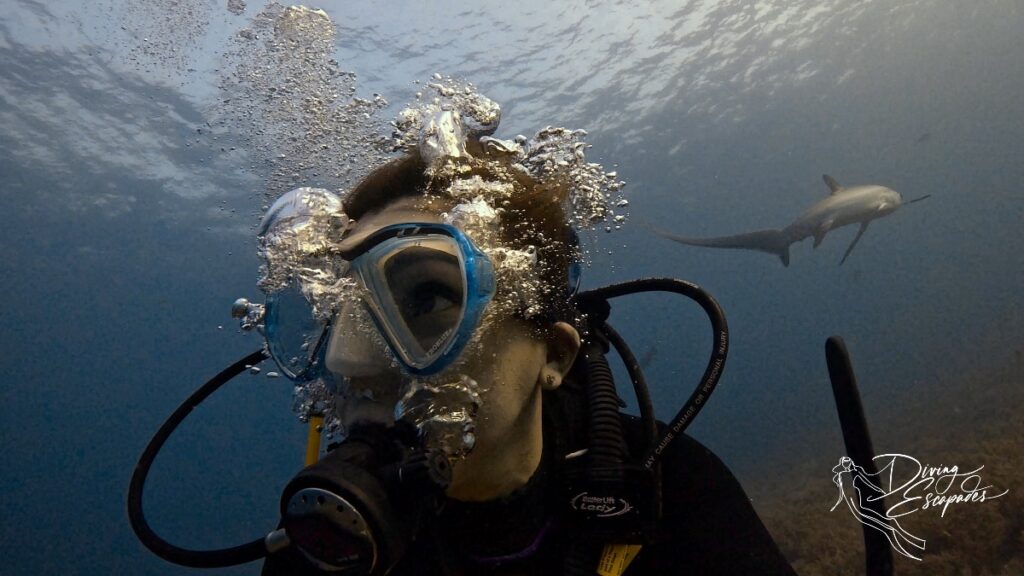
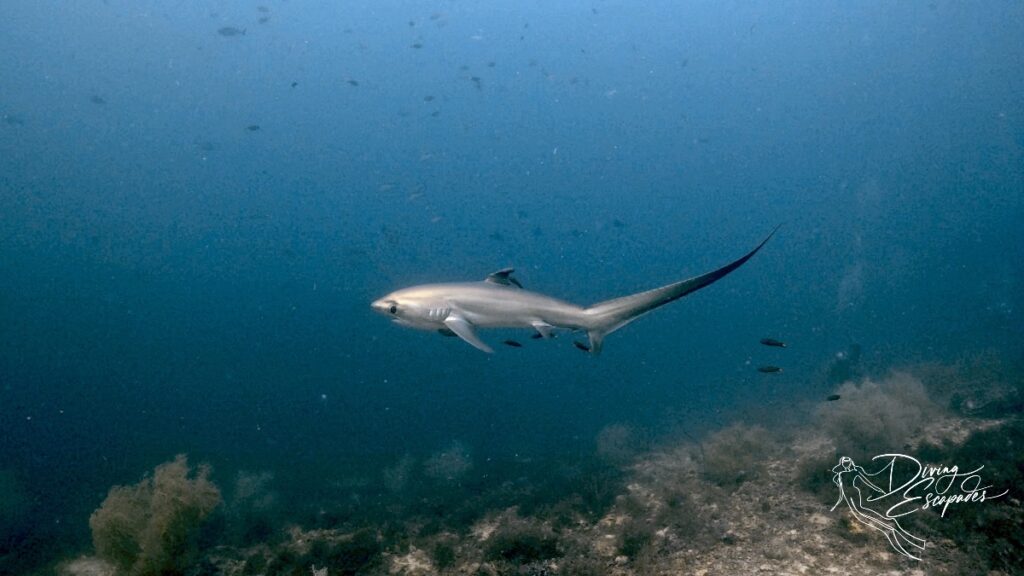
Within seconds of reaching depth, there was already a thresher shark right in front of me. I saw several during both dives, like real close encounters. Big eyes, silvery smooth skin, and that long whip-like tail that makes them so distinctive.
The approach here is completely different from what you might expect. You don’t chase them. You stay still, stay low, and let them come to you. And they do.
The surface interval between Dive 1 and Dive 2 is spent onboard. Breakfast is served, oatmeal with banana, coffee, tea, and water.
Simple and exactly what you need after an early start.
I swapped my GoPro battery, reviewed footage, and rested. Dive 2 had even closer encounters than Dive 1. I filmed more and got better shots because I knew what to expect.
For camera setup, I used a GoPro with a Backscatter wide-angle lens and a floater. No lights, they are not permitted on this dive.
PRO TIP: Use your first local dive in Malapascua the day before to sort your weighting. Kimud Shoal is not the dive where you want to be figuring that out. The cleaning station requires you to hover still, if your buoyancy is off, you will feel it immediately and it will affect your experience.
One lesson I learned the hard way:
During Dive 2, my left foot got a little too close to a hydroid. The briefing had warned us about them, but I drifted slightly lower than I should have and that was one surprisingly tall hydroid. One brief contact later, I had raised rashes and blisters on my left foot (oh man, it hurt sooo bad).
The good news is it was easily avoidable. I wasn’t wearing dive boots, so my skin was exposed. Learn from my mistake and bring a pair. They provide extra protection and make getting up the ladder much more comfortable too.

Planning the full Philippines dive circuit?
The Philippines Dive Circuit Itinerary covers Malapascua, Siquijor, and Bohol with day-by-day planning, dive site breakdowns, transfer logistics, accommodation picks and packing lists. Everything in one place so you can stop researching and start diving.
Get the itinerary →
Other Dive Sites in Malapascua
Kimud Shoal is the headline, but Malapascua has more to offer. If you have four nights, you have time for a second strong dive day. Here are the other main sites worth knowing about:
Lapus-Lapus — About 15 minutes by boat from Evolution and the natural choice for a check dive. Dense soft and hard corals, excellent macro life, and nudibranchs throughout.
I dived it on arrival afternoon. Visibility was not spectacular that day, but it did exactly what a check dive should and flagged my weighting issue before it mattered.
Gato Island — A protected marine sanctuary about an hour away, known for its swim-throughs, white-tip reef sharks, banded sea snakes, and strong macro life. Usually run as a two-dive day trip with lunch. Requires Advanced Open Water.
Capitancillo — A full-day trip around 1.5 to 2 hours from Malapascua. A protected marine sanctuary with impressive table corals in the shallows, walls covered in sea fans and hard corals, and reliable reef fish life. Boats stop at the island for lunch. Suitable for all levels.
PRO TIP: If you have four nights, build in a second proper dive day beyond Kimud Shoal. One morning at the cleaning station and one full dive day elsewhere is a well-rounded Malapascua scuba diving experience.
Marine Life You Can Expect
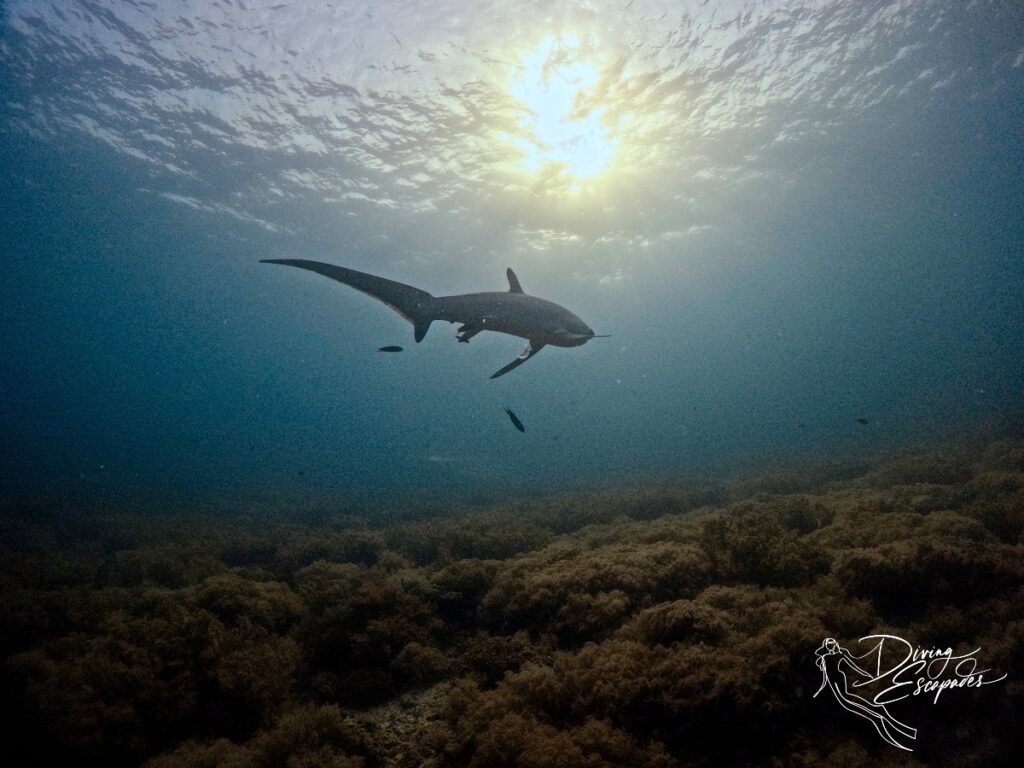
Malapascua delivers more marine biodiversity than its size suggests.
Thresher sharks are the headline — year-round at Kimud Shoal, every morning, at the only consistently reliable dive site for this species in the world.
Baby black tip reef sharks were a surprise highlight for me on the snorkeling island tour, before I’d even done a proper dive.
Macro life is genuinely strong: frogfish, octopus, and nudibranchs throughout. Malapascua also has a good reputation for ornate ghost pipefish.
Mandarin fish are reportedly viewable at a local site on a sunset dive.
One honest note: Conditions vary. My first afternoon dive had poor visibility. The Kimud Shoal dives the next morning were completely different. Always ask your dive center about current conditions before planning your day, and don’t judge the diving on one dive alone.
Tips for Diving in Malapascua
A few things I’d pass on based on my own trip:
Do a check dive before Kimud Shoal. I dove the afternoon before and it was exactly the right call. I caught a weighting issue that would have affected the thresher shark dives significantly.
Get your weighting right. I dove my first dive at 4kg and was overweighted. Switched to 3kg for the thresher shark dives and everything improved. Ask for a buoyancy check if you’re unsure.
Wear dive boots. The tender boat and ladder transfers are easier in boots, and they protect your feet from hydroids and fire coral on the reef. I didn’t wear them, and I paid for it with blisters.
Book Kimud Shoal before you arrive. This is not a dive to leave until the last minute. If it’s high on your list, lock it in early.
Don’t skip the snorkeling island tour. For around 1,200 to 1,500 pesos, you get a private boat with a guide, captain, and assistant for a few hours. The baby black tip reef sharks alone made it worthwhile for me.
Bring reef-safe sunscreen. Evolution is Green Fins accredited and takes reef protection seriously. So should you.
Best Time to Dive in Malapascua
Thresher sharks visit Kimud Shoal every morning year-round. That consistency is what sets Malapascua apart from most dive destinations. You are not timing your trip around a narrow seasonal window.
That said, sea conditions do vary:
December to May is dry season. Best visibility, calmest seas, and the most reliable conditions overall. March and April are the sweet spot.
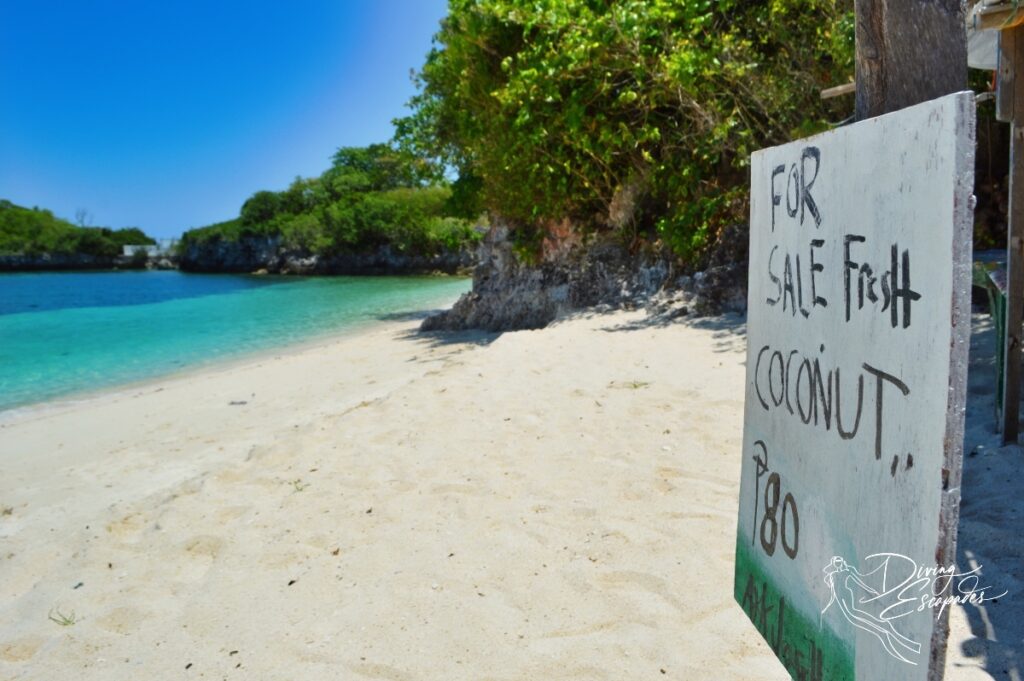
June to November is wet season. Rougher conditions are possible, though diving in Malapascua still runs and thresher sightings continue. Some mornings may be cancelled due to weather.
I visited in late March, peak dry season. Conditions were generally good, with one low-visibility afternoon dive as the exception.
Water temperature sits around 27 to 29°C year-round. A 3mm – 5mm wetsuit is usually enough.
| Season | Months | Conditions |
|---|---|---|
| Dry | Dec to Feb | Good visibility, calm seas |
| Best | Mar to May | Optimal — calm, clear, flat water |
| Wet | Jun to Aug | Rougher possible, diving still runs |
| Wettest | Sep to Nov | Most unsettled period |
How to Get to Malapascua
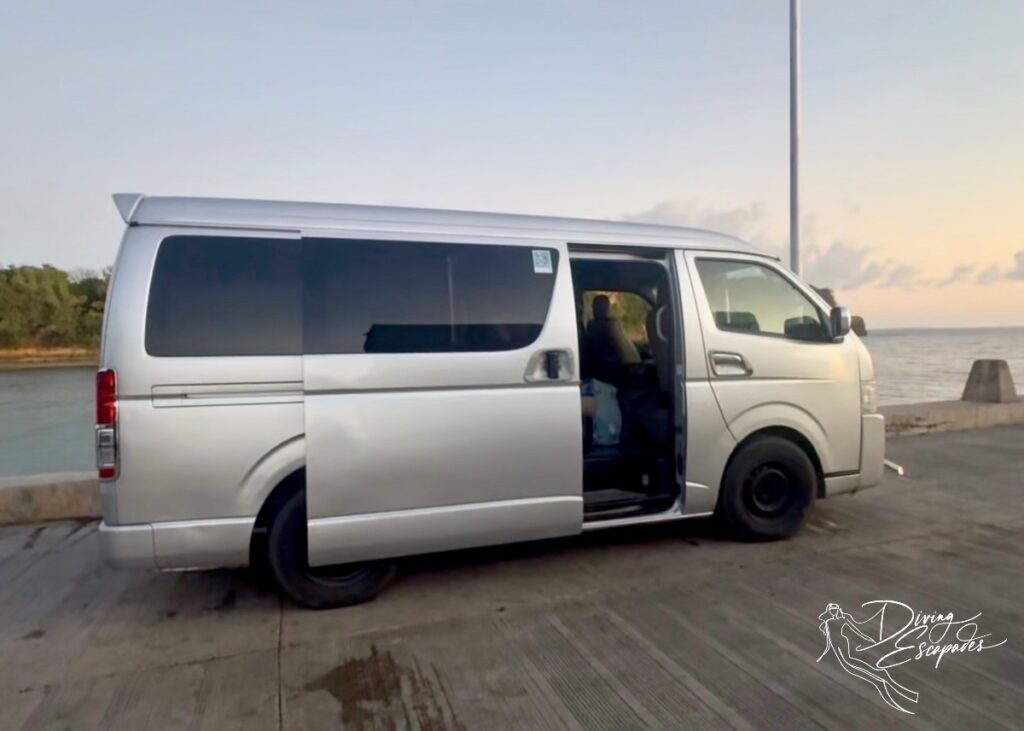
Getting to Malapascua requires flying into Cebu, transferring north to Maya Port, and taking a boat across to the island. It takes planning, but the journey is part of it.
The full breakdown of every option, private transfer, taxi, DIY bus and van, timings, costs, and what to expect at the port, is covered in detail in my guide on how to get to Malapascua from Cebu.
In short: fly into Mactan-Cebu International Airport (CEB), make your way north to Maya Port (around 3 to 4 hours), and take the 30 to 45 minute boat crossing to Malapascua.
If you’re arriving late at night or traveling solo, a private transfer arranged through your dive center is the smoothest option. I arrived at 1:30 AM and it was the right call.
PRO TIP: Boats to Malapascua do not run after dark. Aim to reach Maya Port by around 5:30 PM at the latest, or plan to stay overnight near the port and continue the next morning.
Where to Stay in Malapascua
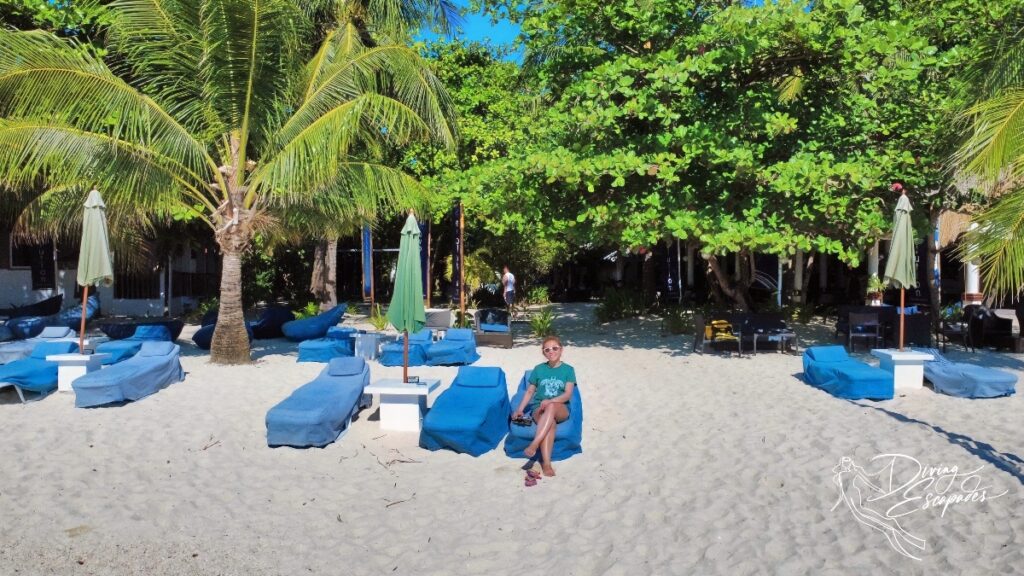
Malapascua doesn’t have big hotel chains. What you’ll find are small resorts, dive lodges, and beachfront stays. Book early if you’re traveling in March, April, or May.
Budget option
Capsule Hotel Malapascua is the best-known budget option on the island — simple, clean, and functional. Good if you’re keeping costs down and spending most of your time underwater anyway.
Mid-range option
Evolution Diving Resort — Beachfront, 16 rooms, restaurant on site, full dive operation. No pool, but the beach is right in front of of you.
Alternatives to Consider
Malapascua Exotic Island Dive Resort — A solid mid-range option with its own dive operation. Good location and well-established on the island.
Ocean Vida Beach and Dive Resort — Relaxed beachfront resort with diving on-site. Good for a quieter stay with direct beach access.
FAQs
Here are the answers to the most commonly asked questions about Malapascua Diving:
Is Malapascua good for beginner divers?
Yes, with the right dive center. The thresher shark dive at Kimud Shoal requires Advanced Open Water certification, or a minimum of around 30 logged dives depending on your operator.
But reef dives, a check dive, and the snorkeling island tour are all suitable for newer divers. Good buoyancy will serve you well here, at the cleaning station, hovering still is everything.
Can you see thresher sharks every day?
Thresher sharks visit Kimud Shoal every morning, and sightings are extremely reliable year-round.
No operator will guarantee wildlife, but Malapascua is as close to a guarantee as this kind of encounter gets.
Do I need Advanced Open Water for the thresher shark dive?
Advanced Open Water is the standard requirement for Kimud Shoal. Some operators may accept divers with a minimum of 30 logged dives, check directly with your dive center before booking.
How many dives should I plan for in Malapascua?
Plan for at least four nights and four to six dives. The thresher shark double dive takes a full morning.
Add an afternoon check dive on arrival, a second full dive day for Gato Island or another site, and a buffer day in case weather affects your plans. One or two nights is possible but you’ll feel rushed.
Is Malapascua safe for solo travelers?
Yes. The island is small, friendly, and very well set up for divers. I traveled alone and felt completely comfortable throughout my stay.
Having your transfers and diving booked through one center makes logistics straightforward, which particularly helps if you’re on your own.
The Wrap Up: Diving in Malapascua
Malapascua diving is definitely awesome. If thresher sharks are on your bucket list, this is one of the only places in the world where the encounter is this reliable. You show up, stay still, and let them come to you.
The island itself is small and unpretentious. The diving is world-class. And if you dive with Evolution Diving, the whole experience is well looked after from the moment you land in Cebu.
Is it worth the 4:30 AM alarm? The roosters at 3 AM? The long journey to get there?
Yes. It genuinely is.
Before you go, make sure you’re covered with DAN Europe dive insurance for diving and SafetyWing travel insurance for everything else.
Building the full circuit? The Philippines Dive Circuit Itinerary has everything — route, dive sites, logistics, accommodation, and packing. Get your copy →
Safe travels!