Diving in Siquijor: Firsthand Guide and Practical Tips
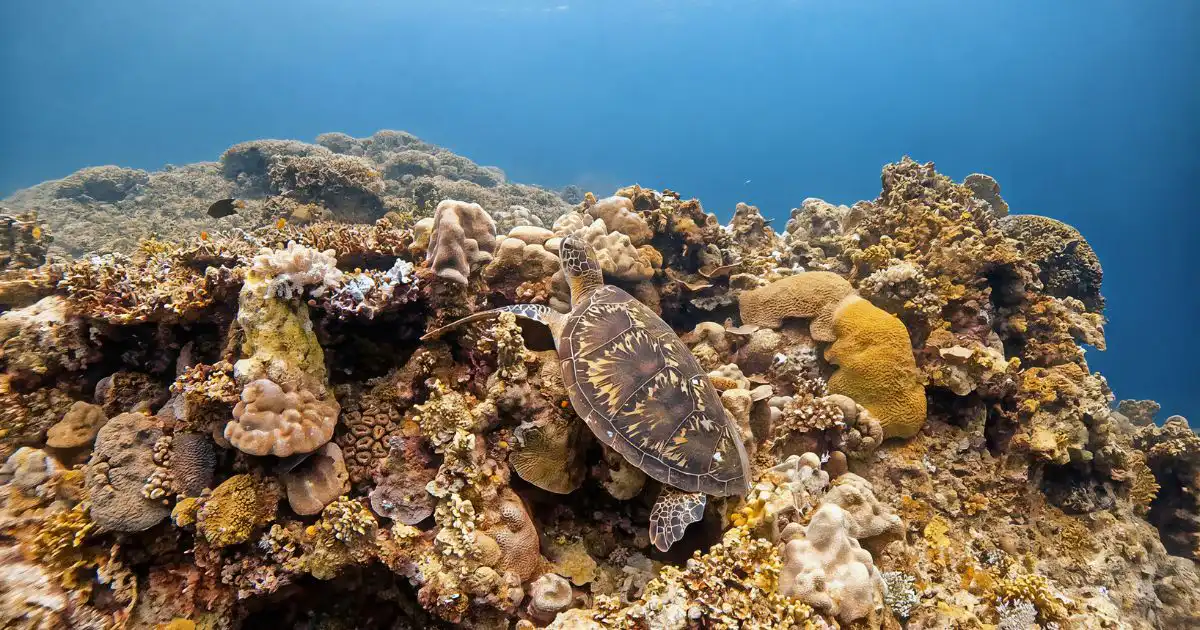

Thinking about diving in Siquijor? I visited in April 2026 expecting a few pleasant reef dives and left wondering why more divers do not talk about this island.
I was born in the Philippines and spent my first 20 years there. I have also returned every year since 2023 to dive and travel, yet Siquijor still caught me by surprise.
I have done multiple dives there, including a night dive, and the calm reefs, healthy coral, turtles and frogfish made this a standout stop on my Philippines dive circuit.
This guide covers what the diving is really like, the sites I visited, the marine life I saw and the practical details that will help you plan your own stay. Let’s dive in!
Siquijor Diving Quick Answer
Yes, Siquijor is worth adding to a Philippines dive trip if you enjoy calm reef diving, turtles, macro life and small-group dives.
It is particularly good for Open Water divers, newer divers building confidence and experienced divers who are happy to slow down and look closely.
It is less suited to someone whose entire wish list revolves around large pelagic encounters (e.g. Malapascua has its thresher sharks).
Siquijor’s appeal is a relaxed series of consistently enjoyable dives, with the island’s slower pace waiting for you afterwards.
Siquijor diving at a glance:
- Best for: Relaxed reef dives, turtles, macro life, night diving and small groups
- Certification: Open Water and above for the sites covered here
- Typical conditions: Warm water, generally calm seas and little to no current
- Main diving base: San Juan
- Minimum Suggested stay: At least four nights for day dives, a night dive and time to explore the island
- My standout experience: The night dive at Last Frontier’s house reef
- Main planning issue: San Juan’s three-day monthly marine closure
What Diving in Siquijor Is Like
Siquijor’s diving is reef-focused, generally calm and comfortable. Conditions are usually warm with little to no current, and most dive centres are based around San Juan on the western side of the island.
This is a good place to build confidence because the sites I visited did not feel technically demanding.
Experienced divers can still have an excellent time, particularly if they enjoy macro life, underwater photography or an unhurried night dive.
The coral coverage was healthy and dense at the sites I visited. That made the dives beautiful, but it also meant buoyancy mattered. There was plenty of reef around me and plenty of reason to keep my fins under control.
My Siquijor Diving Experience
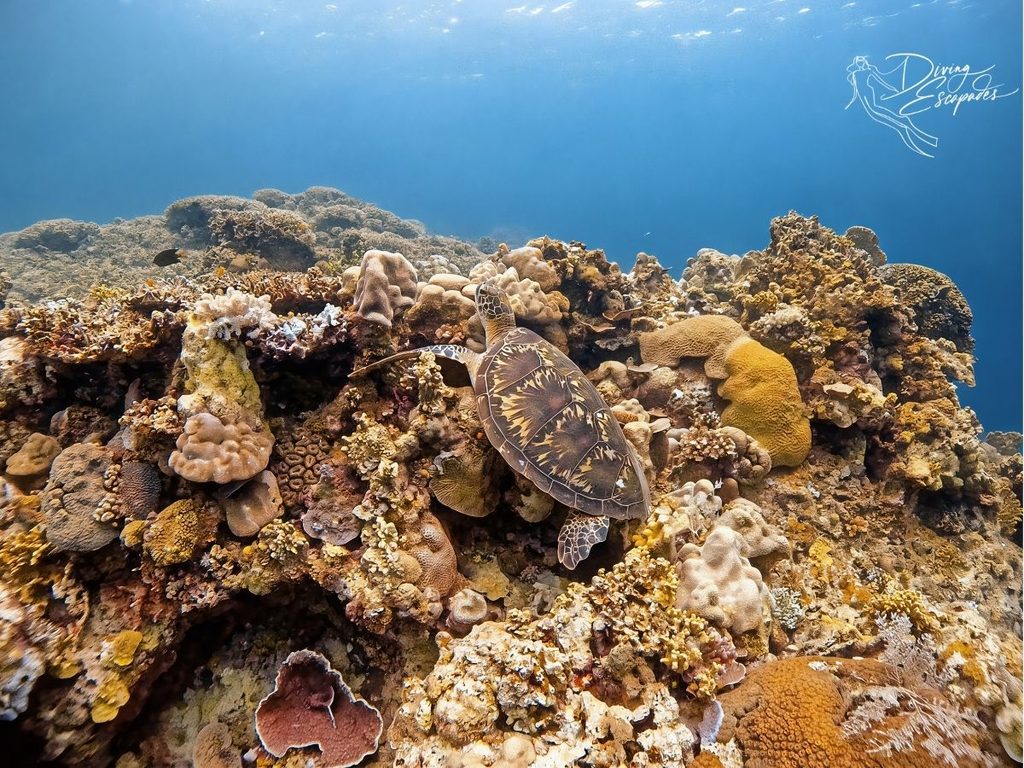
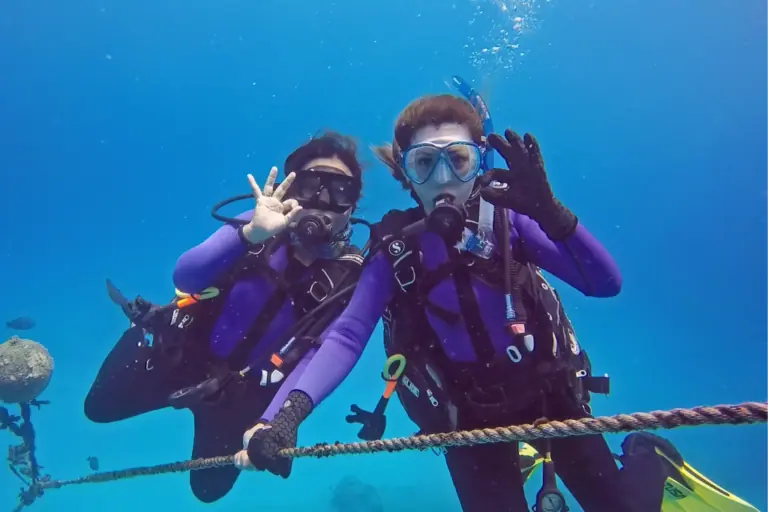
I based myself in San Juan and dived with Last Frontier Dive for all three of my dives: two day dives at Diosa and Baha Reef, and a night dive on the house reef.
The dives were calm and rewarding. I saw my first frogfish, turtles, octopus, nudibranchs and dense coral coverage, and the night dive turned out to be one of the better ones I have done anywhere.
Dive Sites in Siquijor
I only describe the sites I personally dived here. Both day dives were relaxed reef dives, but each delivered a different highlight.
Diosa
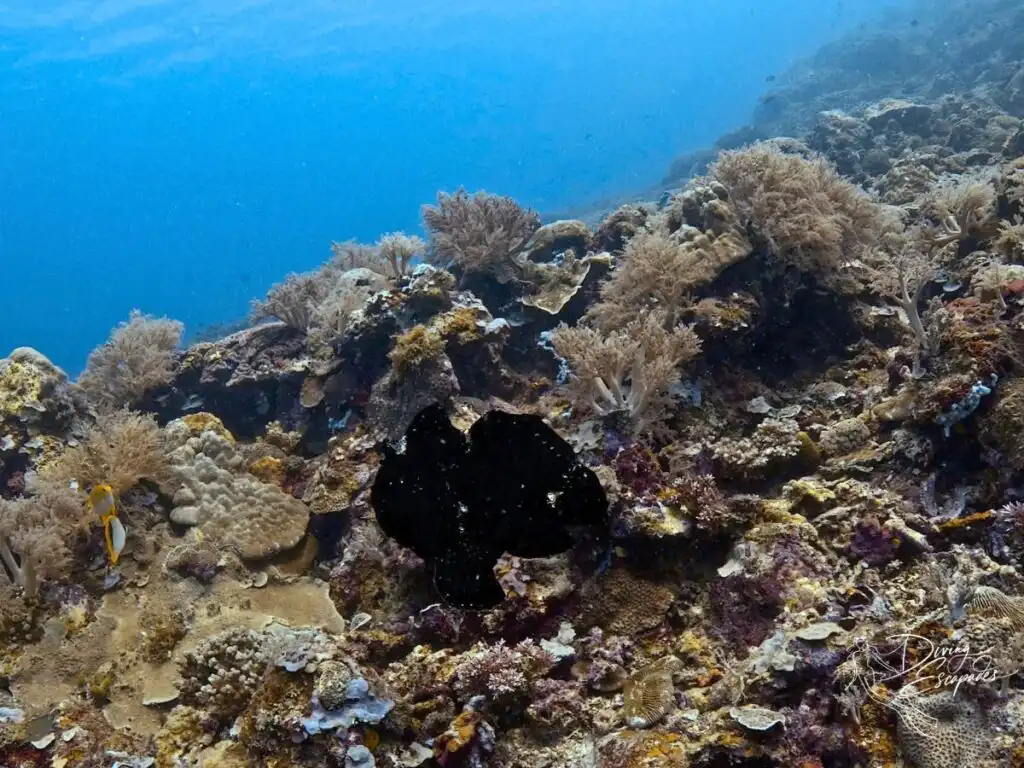
Diosa sits in front of Diosa Resort in San Juan and makes an easy first dive.
It has dense coral coverage and is known as a reliable spot for green sea turtles, so it works well as a gentle introduction to the local reef conditions before you range further.
In here, I saw my first frogfish. It was black and I found it along with an octopus nearby.
With light current and the site close to the centre, Diosa is a comfortable choice for newer divers or anyone shaking off the rust on the first dive of a trip.
Baha Reef
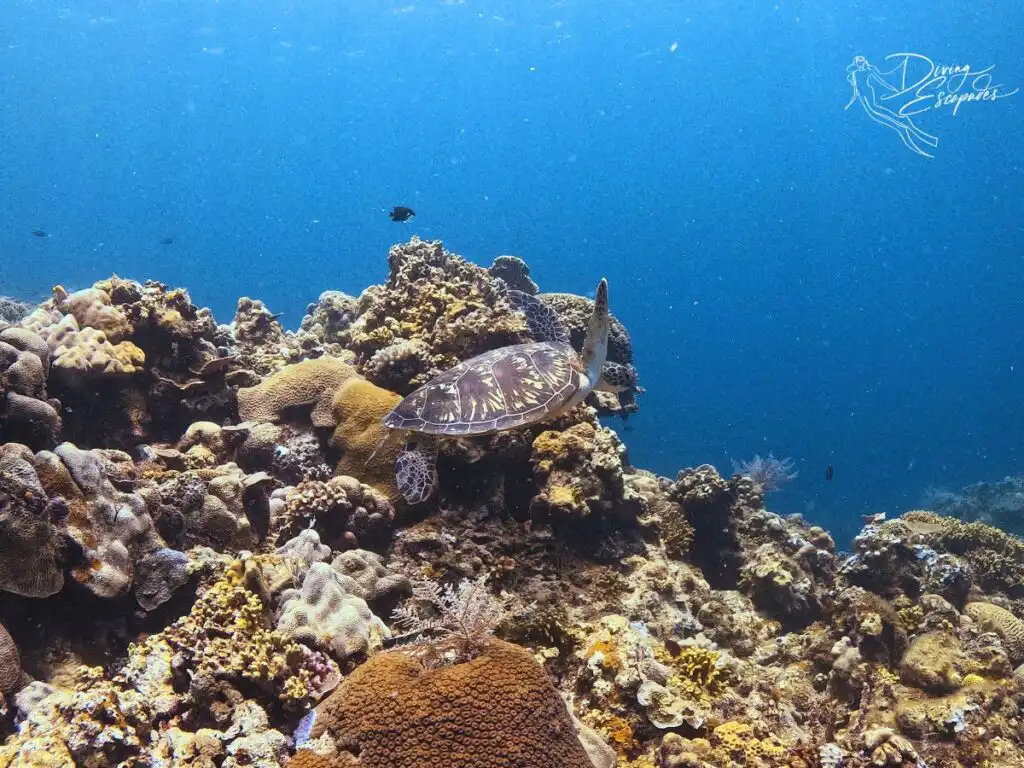
Baha Reef, in front of Baha Resort, was one of the highlights of my trip. I was the only diver with the divemaster, so it felt almost like a private dive. We could take our time and really slow down to look closely at the reef and all the little things hiding among the corals.
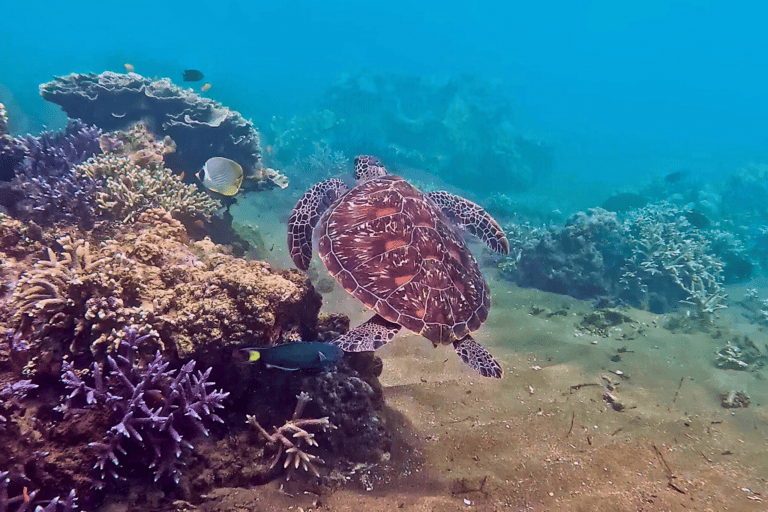
I saw turtles, an octopus and several nudibranchs. Visibility was good and the coral coverage was excellent throughout the dive. It is a quiet, small-group site, and that is a large part of what makes it special.
PRO TIP: Buoyancy control matters at Baha Reef because the coral is dense and close. If you are not confident hovering without touching the reef, check your weighting and practise before moving over the most delicate areas.
My Siquijor Night Dive
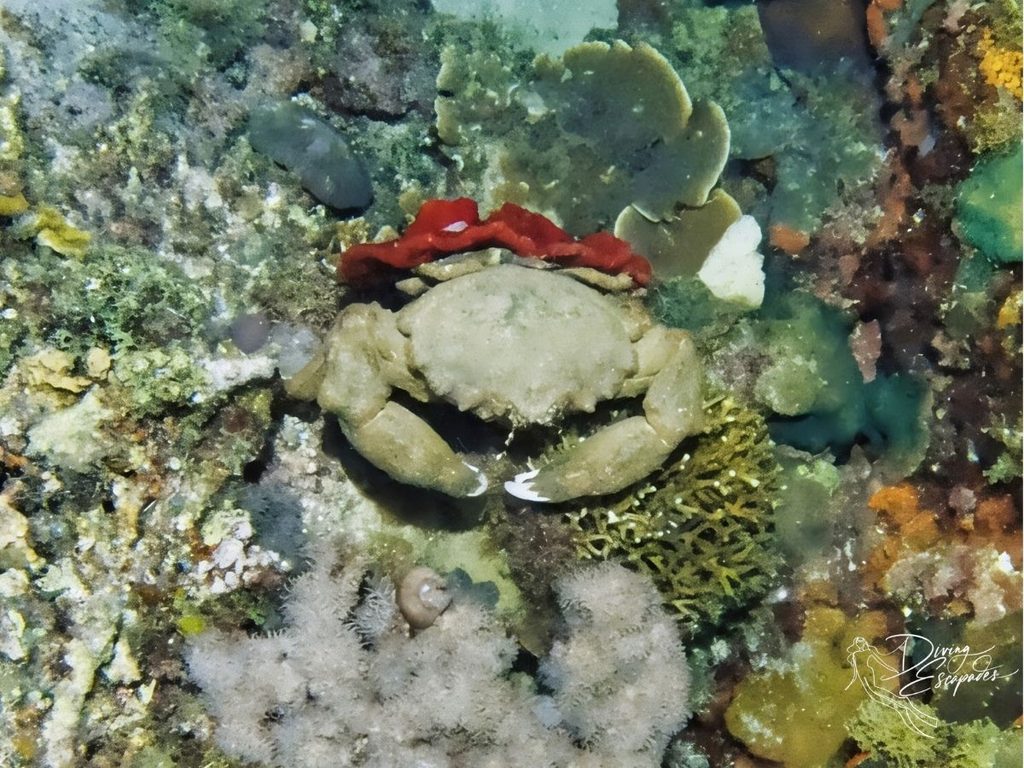
The night dive at Last Frontier’s house reef was genuinely one of the better night dives I have done.
The group was Pascal from France, Seb and me. The briefing was in French, which was not the language I expected to be using on a Philippine island, but it worked perfectly well.
Once we entered the water, the reef felt completely different from the daytime sites.
Octopus were active, several species of nudibranch were out and we saw two large sponge crabs.
Sponge crabs belong to the Dromiidae family and carry a piece of sponge on their back as camouflage. I had never seen one before, so finding two on the same dive was a real treat.
The dive is easy and accessible rather than technically difficult.
The house reef is straightforward to navigate with a guide, which makes it a good night dive if you already have night-diving experience, or the training and confidence to dive comfortably after dark.
PRO TIP: Last Frontier runs night dives regularly, but scheduling varies. Ask about it when you first make contact rather than once you arrive, and confirm what to bring, including a torch. It would be a shame to remember the night dive just as your ferry is leaving.
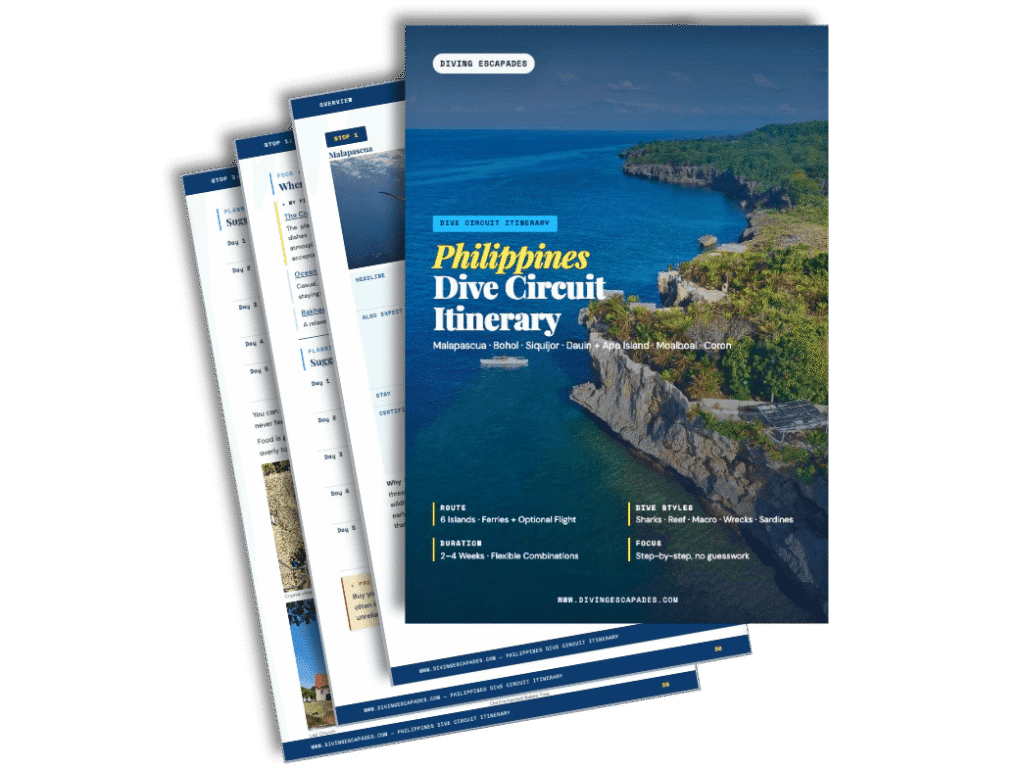
Planning a longer dive trip through the Philippines? My Philippines Dive Circuit Itinerary connects Siquijor with Malapascua, Bohol, Dauin, Apo Island, Moalboal and optional Coron, including the transfers between each stop.
Marine Life I Saw While Diving in Siquijor
Siquijor rewards divers who take their time. These were the main marine-life highlights from my three dives:
- Green sea turtles: I saw them at Baha Reef. Sightings are common at several local sites, although they are never guaranteed.
- Frogfish: My first frogfish was a tiny black one hidden in the reef at Diosa.
- Octopus: I saw them during the day and again on the night dive, when they were noticeably more active.
- Nudibranchs: I found several species across the day and night dives.
- Sponge crabs: We saw two large sponge crabs during the night dive.
- Coral: The coral coverage at Diosa and Baha Reef was healthy and dense during my visit.
If your dream dive trip is built around large headline species, you may prefer to prioritise Malapascua diving or Balicasag. If you enjoy turtles, smaller creatures and simply having time to observe a reef, Siquijor is very rewarding.
Recommended Dive Centre in Siquijor
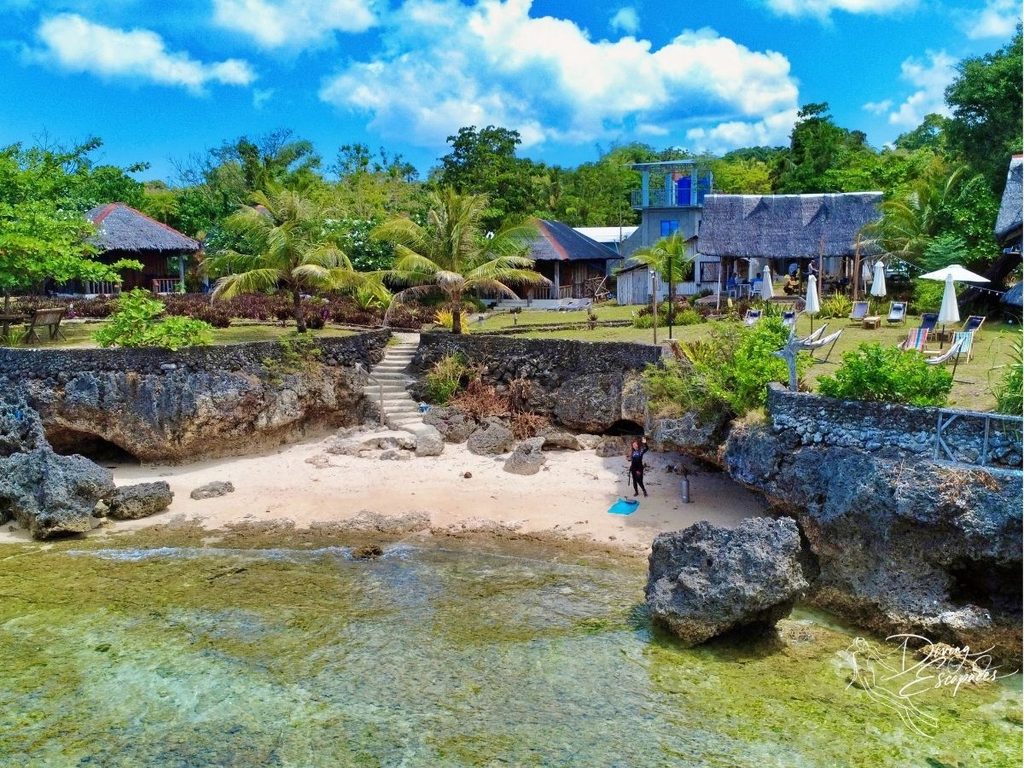
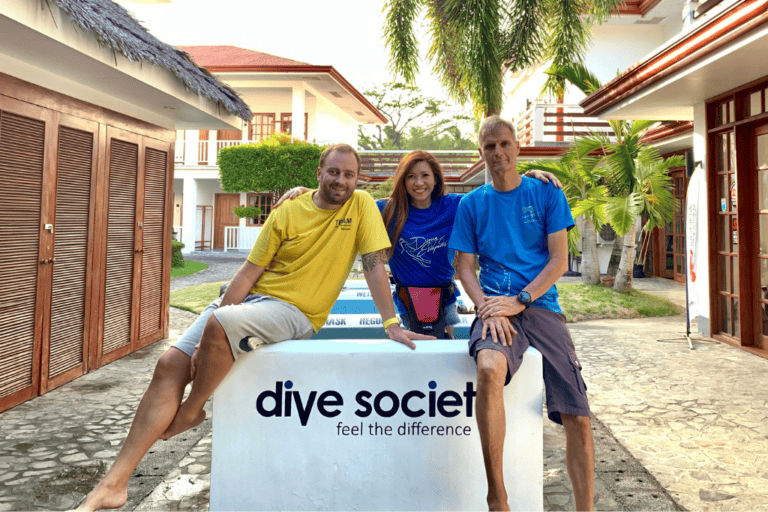
I dived with Last Frontier Dive in San Juan and would happily go back. It is a PADI 5 Star Instructor Development Centre and a Green Fins member, with a maximum of four divers per guide.
That small-group approach shaped the experience. The briefings were clear, nobody was rushed and my dives felt personal rather than processed.
The team also took reef protection and buoyancy seriously without making the atmosphere stiff.
They run boats out to the different dive sites rather than relying on shore dives alone, and night dives run regularly.
Last Frontier currently asks divers to share their dates, certification level, last-dive date and preferred activity when checking availability.
Book ahead when possible because the small groups naturally limit the number of spaces.
For more on choosing operators that take reef protection seriously, read my guide to sustainable diving.
Important San Juan Marine Closure
San Juan has a local reef-protection measure that restricts certain water activities for three days after each new moon.
Diving is not permitted in municipal waters during the closure, while snorkelling is restricted in Tubod Marine Sanctuary.
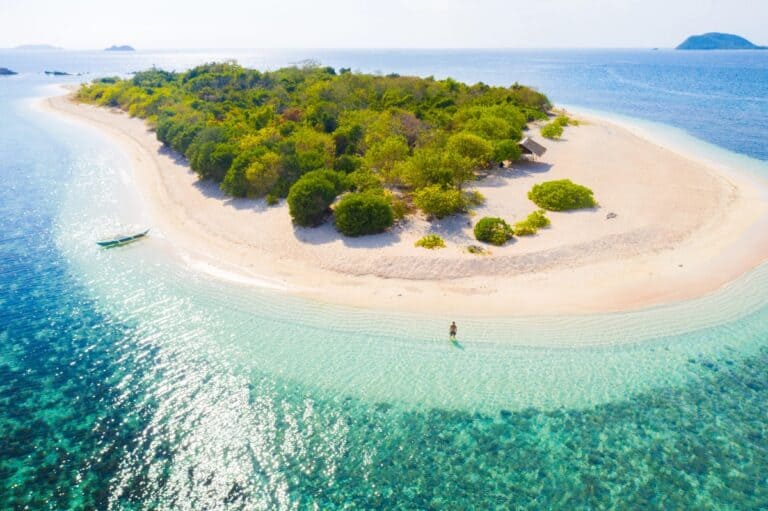
Swimming remains allowed in designated white-sand areas, generally from 6:00 AM to 5:00 PM.
Your dive centre will tell you if your dates overlap with the closure. Check this before fixing the diving portion of your trip because losing three dive days can change the whole plan.
2026 closure dates:
| Month | Closure dates |
| January | 20 to 22 |
| February | 18 to 20 |
| March | 20 to 22 |
| April | 18 to 20 |
| May | 18 to 20 |
| June | 16 to 18 |
| July | 15 to 17 |
| August | 14 to 16 |
| September | 12 to 14 |
| October | 11 to 13 |
| November | 10 to 12 |
| December | 10 to 12 |
PRO TIP: If your dates fall during the closure, use those days for the island tour rather than treating them as wasted time. Siquijor gives you plenty to do above water.
Practical Tips for Diving in Siquijor
These are the small planning details that will make your dive days easier, especially if Siquijor sits in the middle of a longer Philippines dive trip.
1. Book Small-Group Diving in Advance
Last Frontier limits its groups to four divers per guide. Contact the team before you arrive and share your certification level, last-dive date, preferred dates and interest in the night dive.
2. Check the Marine Closure Before Booking Dive Days
The three-day closure is significant when you only have four or five nights on the island. Build your dive plan around it rather than discovering it after your ferry tickets are booked.
3. Ask What Is Included for the Night Dive
Confirm the meeting time and the equipment you need, including a torch. If you have not dived at night recently, tell the centre when you book so they can advise you properly.
4. Leave Enough Time Before Flying
Do not place a flight too close to your final dive. Follow your dive computer and training agency’s no-fly guidance, and add a sensible buffer if Siquijor is your final diving stop.
5. Bring Cash Even If You Prefer Paying by Card
I paid my Last Frontier balance by credit card in April 2026. Payment options can change, so ask when booking and keep Philippine pesos for transport, food and smaller purchases around the island.
6. Use the Surface Interval Well
The beachfront at Last Frontier is a beautiful place to rest between dives. If you travel with a drone, check the local rules and conditions before flying it. I captured some of my favourite aerial footage during the surface interval.
7. Pack for Reef and Boat Days
Bring sun protection, a reusable water bottle and anything you prefer to use from your own dive kit. My dive-trip packing guide can help you decide what deserves space in your bag.
Want more practical planning help without buying anything? Browse my free travel and diving guides and choose the one that fits your next trip.
Best Time to Dive in Siquijor
You can dive in Siquijor throughout the year. December to May is the drier period and generally brings calmer conditions and better visibility.
June to November is wetter, and rough weather can sometimes affect both diving and ferry travel.
Frequently Asked Questions
A few questions that come up when divers are deciding whether, and how, to fit Siquijor into a Philippines dive trip.
Yes, if you enjoy calm reef diving, turtles, macro life and an unhurried pace.
It is not the place for big pelagic encounters; that is Malapascua’s thresher sharks or Bohol’s Balicasag, but for relaxed, consistently enjoyable dives with a slow island waiting for you afterwards, it earns its spot.
No. The day sites I dived are comfortable for Open Water divers, and Siquijor’s calm, low-current conditions make it one of the easier stops to dive.
For the night dive you need to be comfortable in the water after dark, so check your own training and ask Last Frontier what they require before you book.
Plan at least four nights. Two nights was enough for two day dives, a night dive and a quick look around, but it felt rushed.
Four gives you room for the diving, the island and the three-day marine closure if your dates happen to overlap it.
Diving is not permitted in San Juan’s municipal waters for three days after each new moon.
Your dive centre will tell you if your dates overlap.
If they do, use those days for the island rather than writing them off. Check the 2026 closure dates above before you fix your dive days.
Different trips. Malapascua is about reliable thresher-shark dives and very early starts; Siquijor is about calm reefs, turtles, macro and a relaxed night dive.
Many divers do both, and they pair well on a Philippines circuit. A full comparison is coming in a separate post.
More Philippines Diving Guides
Continue planning your route with these published guides:
Compare Philippine dive destinations: Read my guide to scuba diving in the Philippines.
Add the thresher-shark stop: Plan your dives with my Malapascua diving guide.
Continue to Negros: See what to expect when diving in Dauin.
Travelling alone? My solo dive travel tips cover the wider planning habits that help me feel prepared on solo trips.
Travel with less stress: Use my dive-trip packing guide.
The Wrap Up: Diving in Siquijor
Siquijor surprised me in the best way. The diving was calm, the reefs were healthy, and there was plenty to see, from turtles and frogfish to octopuses and sponge crabs after dark.
If you enjoy relaxed dives, small groups and taking your time to look for marine life, Siquijor is well worth adding to your Philippines diving itinerary.
I arrived thinking of Siquijor mainly as the Philippines’ mystical island. I left already wanting a few more dives.
Enjoy Siquijor, and safe travels!