Be Part of the Solution: Clean the Ocean with the TRSHBG Ocean Bag


The TRSHBG ocean bag is something I still bring on every scuba dive. I first discovered it at boot Düsseldorf in 2024, started collecting rubbish with it while diving in the Philippines, and haven’t stopped using it since.
I used to sell TRSHBG through Diving Escapades, but I no longer have a shop or sell the bags. In this blog post, I want to share why I like using mine, how I became involved, and what you should know before picking up rubbish underwater. Let’s dive in!
Discovering TRSHBG: From First Use to Passionate Advocate
If you’re wondering why I got so attached to a rubbish-collection bag, it started with a conversation at a dive show.
At boot Düsseldorf in Germany in 2024, I had the pleasure of meeting the TRSHBG team and talking with Helene and Trieu. Their dedication to fighting ocean pollution was genuinely inspiring.
They introduced me to TRSHBG, a compact bag designed to hold rubbish collected during water activities. I liked the idea of being able to pick up a stray piece of plastic without making the whole dive about cleaning up.

Photo with the amazing TRSHBG team at Boot 2024 in Düsseldorf, originally posted on the Diving Escapades’ Instagram page.
How and Where is TRSHBG Made
One detail I appreciated when I first learned about TRSHBG was its use of repurposed materials. According to the TRSHBG team, the bags were developed in Bali and made using upcycled materials such as banners and scooter tubes.
The image below shows how the bags were made when the team shared this information with me. For current manufacturing or product specifications, I’d check with TRSHBG directly rather than assume nothing has changed.

Photo courtesy of the TRSHBG team.
First Use
I first used my TRSHBG on a dive in the Philippines. As I collected discarded plastics, old textiles and other debris, it was satisfying to know I was leaving a little less rubbish behind.
Below are some photos from those dives. You don’t have to collect a huge pile of rubbish for it to feel worthwhile.
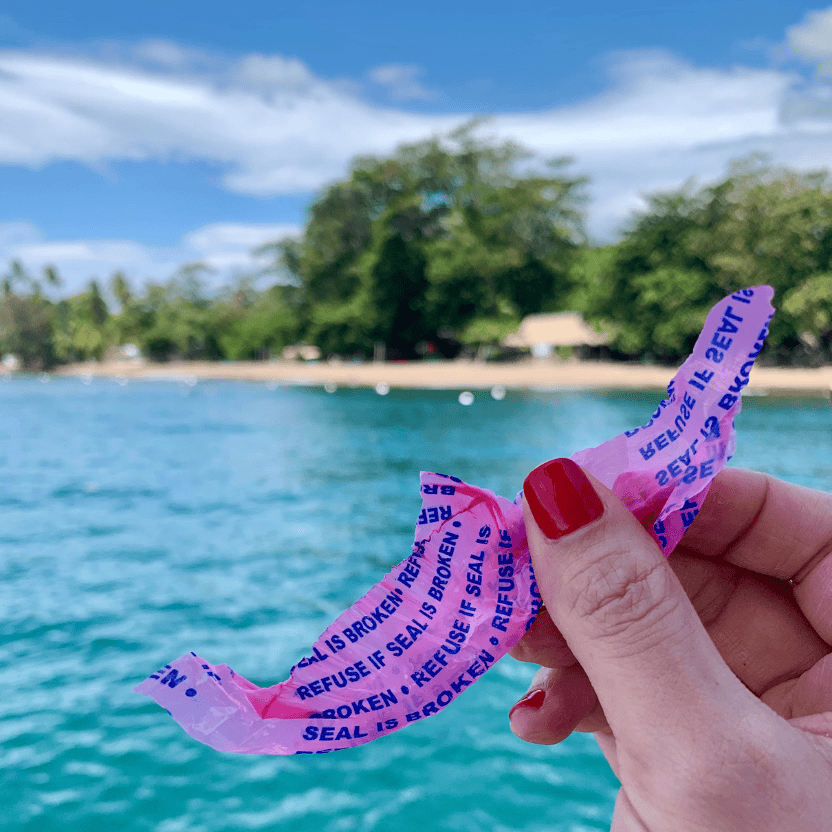
Here’s the first piece of plastic I collected with my TRSHBG. It felt great to leave the ocean one piece of plastic lighter.
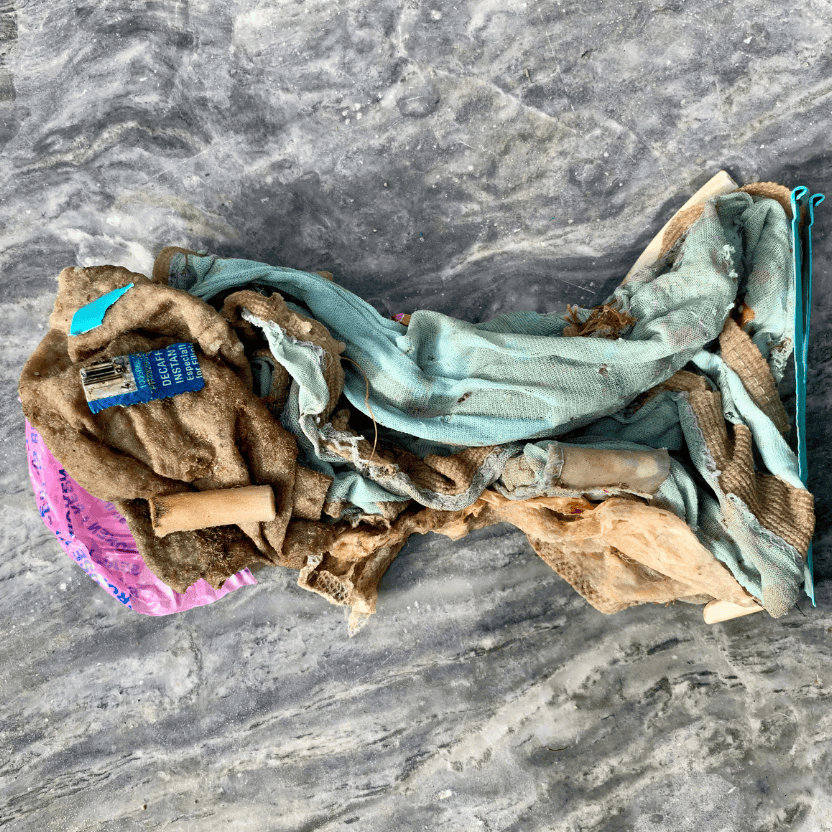
Catch of the day! After my triple-dive day in Dauin, Dumaguete, Philippines, here’s what Jun-Jun from Dive Society Dauin and I managed to gather. Not a lot—and that’s a good thing!—but we’re happy that we left the ocean better than we found it.
That wasn’t the first time I’d seen rubbish underwater. I’ve come across discarded plastic bottles and other debris while diving in Queensland and New South Wales in Australia, Hawaii, and the Mediterranean.
After my experience in the Philippines, I contacted Trieu to ask how I could help spread the word. I eventually became a TRSHBG dealer in Luxembourg. That was part of my story at the time, but I no longer sell TRSHBG. I still use mine on every dive because I genuinely like having somewhere to put small, safely removable pieces of litter.
The Urgency of the Issue
You don’t have to travel to an ocean garbage patch to see why marine litter matters. Even an otherwise lovely dive site can have a stray bottle or piece of packaging on the seabed.
When I started learning more about marine debris, I was surprised to discover that the Great Pacific Garbage Patch wasn’t the solid floating island of rubbish I’d imagined. As NOAA explains, debris is spread through a huge area of the North Pacific, including pieces too small to notice from a boat.
A 2018 scientific study estimated a plastic accumulation zone of about 1.6 million square kilometres between Hawaii and California. That’s a model-based estimate from that study, not a fixed boundary or an exact current measurement. Currents, wind and sampling methods make the patch difficult to measure precisely.
Plastic debris can harm wildlife through ingestion and entanglement. And although scientists continue to study what microplastic exposure means for human health, I don’t think we need to exaggerate those uncertainties to have a good reason to reduce rubbish entering the sea.
PRO TIP: Picking up rubbish is useful, but preventing it from entering rivers and oceans in the first place matters too. Reuse what you can, dispose of waste properly, and join an organised local clean-up if you want to do more.
Why Every Piece Counts
For me, the attraction of carrying a TRSHBG is simple: if I see a loose bit of plastic I can safely collect, I have somewhere to put it.
Plastic can persist and fragment into smaller pieces rather than simply disappearing. The rate depends on the material and conditions, so I wouldn’t rely on a blanket statement that every plastic item takes exactly 500 years to degrade. The UN’s information on plastic persistence provides more context.
Below, see a collage of marine debris, ranging from discarded plastic forks, bottles and toothpaste tubes to various plastics found in the ocean.

Marine debris photos by Naja Bertolt Jensen on Unsplash.
What should you pick up during a dive?
This is where I’d be careful. Not every object underwater should be moved. Rubbish may be tangled around coral, sheltering animals, too heavy to lift safely, or potentially hazardous.
The NOAA Marine Debris Program recommends leaving unknown or potentially dangerous items alone and reporting them appropriately. Its guidance for debris removal while diving also explains why disturbing marine life or using your buoyancy control device (BCD) to lift a heavy object can cause problems.
For everyday recreational dives, I’d keep it simple:
- Collect only small, loose items when it’s safe and permitted to do so.
- Keep your buoyancy, gas supply, buddy and dive plan as the priority.
- Don’t pull fishing line or nets off coral, or disturb animals sheltering in debris.
- Leave sharp, unknown, heavy or potentially hazardous objects for a properly equipped cleanup team.
- Sort and dispose of anything you’ve collected responsibly once you’re back on land.
PRO TIP: If a piece of rubbish would require you to touch coral, dig around marine life or lose control of your buoyancy, leave it. A clean-up isn’t helpful if it creates a new problem underwater.
The Power of Community
One thing I’ve always liked about TRSHBG is the straightforward idea behind it: you can enjoy the dive and still do something useful when the opportunity comes up.
When I was a dealer in Luxembourg, I wanted to introduce more divers to that idea. Although the shop is gone, my interest in ocean conservation hasn’t changed, and the bag still comes diving with me.
TRSHBG’s official website continues to describe its ocean-cleaner community and provides information about its products. I can’t confirm whether ownership changed after Trieu considered selling the company, and I haven’t tested the current ordering process.
You don’t need a particular brand of bag to help, though. If you want to participate, start with safe, small actions or join a cleanup organised by a local dive centre or conservation group.
How to Find TRSHBG Today
If you’ve read this far because you want to find the bag, here’s the most useful information I can give you without guessing about stock or sellers.
I no longer sell TRSHBG through Diving Escapades. As of my October 2026 check, the official TRSHBG website still has a shop and a dealer directory. Its homepage says it currently has the 3.8-litre hip bag size remaining, but I’d confirm stock, delivery and product details with the company before ordering.
If the bag isn’t available where you live, you can still take part in a local beach or underwater clean-up using suitable equipment and following the organiser’s safety procedures.
Frequently Asked Questions
If you’re thinking about taking a rubbish bag underwater, these are the practical questions I’d consider first.
Do I still sell TRSHBG on Diving Escapades?
No. I removed the shop from my website and no longer sell TRSHBG bags. This article is about my own experience using one.
Where can I buy a TRSHBG ocean bag?
The official TRSHBG website currently lists shopping options and dealers. Check with them directly for up-to-date availability and shipping information; I can’t guarantee that stock or ownership details remain unchanged.
Can I collect any rubbish I see on a dive?
No. Only pick up items you can remove safely without disturbing marine life or compromising your dive. Leave entangled fishing gear, heavy objects and anything unidentified or hazardous to trained cleanup teams, and follow local rules.
Do I need a TRSHBG to help clean the ocean?
Not at all. You can prevent litter, join organised beach cleanups, reduce single-use waste and support responsible marine conservation efforts. The bag is simply a practical tool I enjoy using.
The Wrap Up: TRSHBG Ocean Bag
I first picked up a TRSHBG because I was inspired by Trieu and Helene at boot Düsseldorf in 2024. After using it during my dives in the Philippines, I was convinced that collecting a few safe pieces of rubbish whenever I could was a habit worth keeping.
I no longer sell the bags, but I still take mine on every dive. If you want to look for one, check with TRSHBG directly for current availability. And whether you have a special bag or not, my advice is the same: enjoy the ocean, protect the marine life around you, and leave the place a little better than you found it when you can do so safely.
Extra: How To Use The TRSHBG Hip Bag to Clean The Ocean