Scuba Diving and Flying: How Long Should You Wait Before Your Flight?
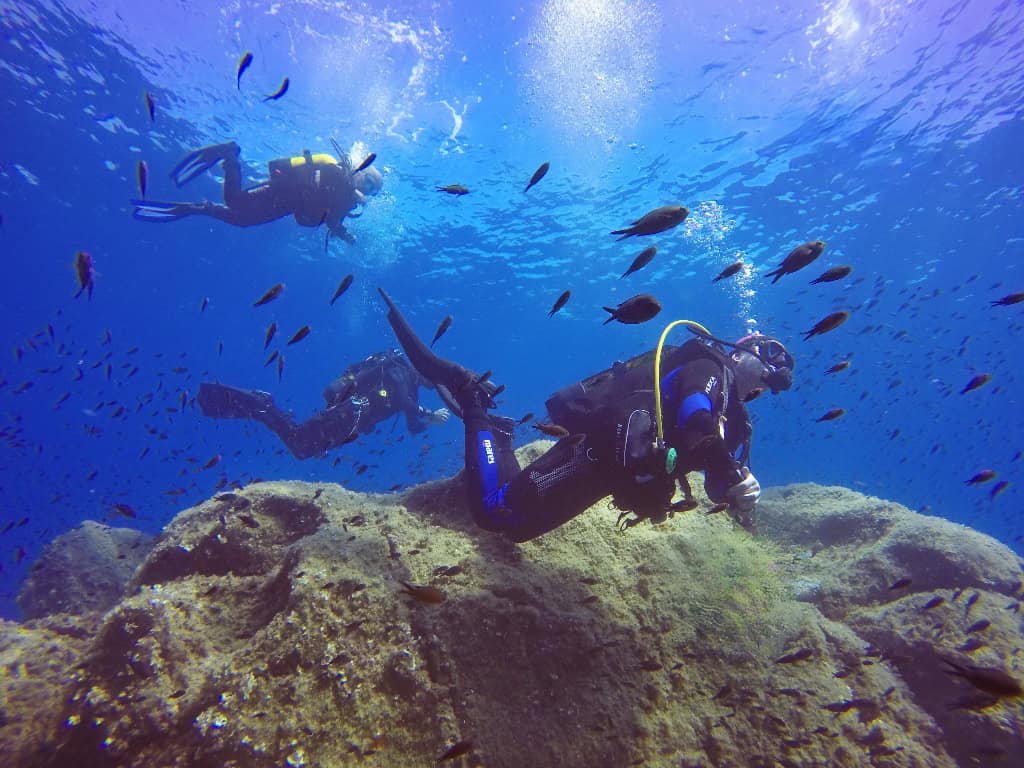

Scuba diving and flying don’t mix well if you leave too little time between them. I’ve had to skip the last dive of a holiday more than once because of my flight schedule, and although it’s disappointing, it’s a decision I never regret.
I usually allow at least 18 hours after recreational diving before flying, and I prefer 24 hours whenever possible, especially after several days of diving. I learned to dive in Brisbane back in 2013, and planning that final surface interval has become a normal part of every diving trip I take.
So how long should you actually wait, and how do you fit your dives around your flights without losing half your holiday? Here’s what I do, along with the guidance divers should know. Let’s dive in!
How Long Should You Wait to Fly After Scuba Diving?
Let’s start with the important numbers. According to Divers Alert Network (DAN) and the CDC Yellow Book, the recommended minimum waiting time depends on the diving you’ve done.
| Your diving situation | Recommended minimum wait before flying |
|---|---|
| One no-decompression dive | At least 12 hours |
| Multiple dives in one day or diving over several days | At least 18 hours |
| A dive requiring decompression stops | More conservative planning is needed; CDC advises 24 to 48 hours |
| Possible decompression sickness symptoms | Do not fly. Seek urgent medical assessment. |
These are minimum recommendations for divers without symptoms, not a promise that decompression sickness cannot happen. Waiting longer provides an additional safety margin. The FAA’s guidance for flying after diving also distinguishes an actual flight altitude above 8,000 feet from the pressure altitude inside a cabin.
My personal rule is simple when I think about scuba diving and flying: I use 18 hours as a minimum for my usual recreational diving, but if I’ve spent several days diving, I try to leave a full 24 hours. I also check my dive computer and follow a longer no-fly warning if it gives one.
And if your dive involved mandatory decompression stops, technical diving or unusual conditions, don’t rely on my holiday rule. Get advice appropriate to your actual dive profile. The DAN travel guidance on scuba and water-related injuries also discusses more conservative planning for these dives.
Pro tip: Check your flight departure time before booking your final dive. It’s much easier to rearrange a boat trip than an airline ticket!
Why Is Flying After Diving a Risk?
When you scuba dive, your body absorbs additional nitrogen from the gas you’re breathing under pressure. As you ascend and spend time at the surface, that nitrogen gradually leaves your body.
The problem is that flying exposes you to lower atmospheric pressure again. Commercial airline cabins are pressurised, but not to sea-level pressure. The U.S. cabin pressurization regulation helps explain why a flight still adds a pressure change. If you fly too soon, that extra drop in pressure can increase your risk of decompression sickness (DCS).
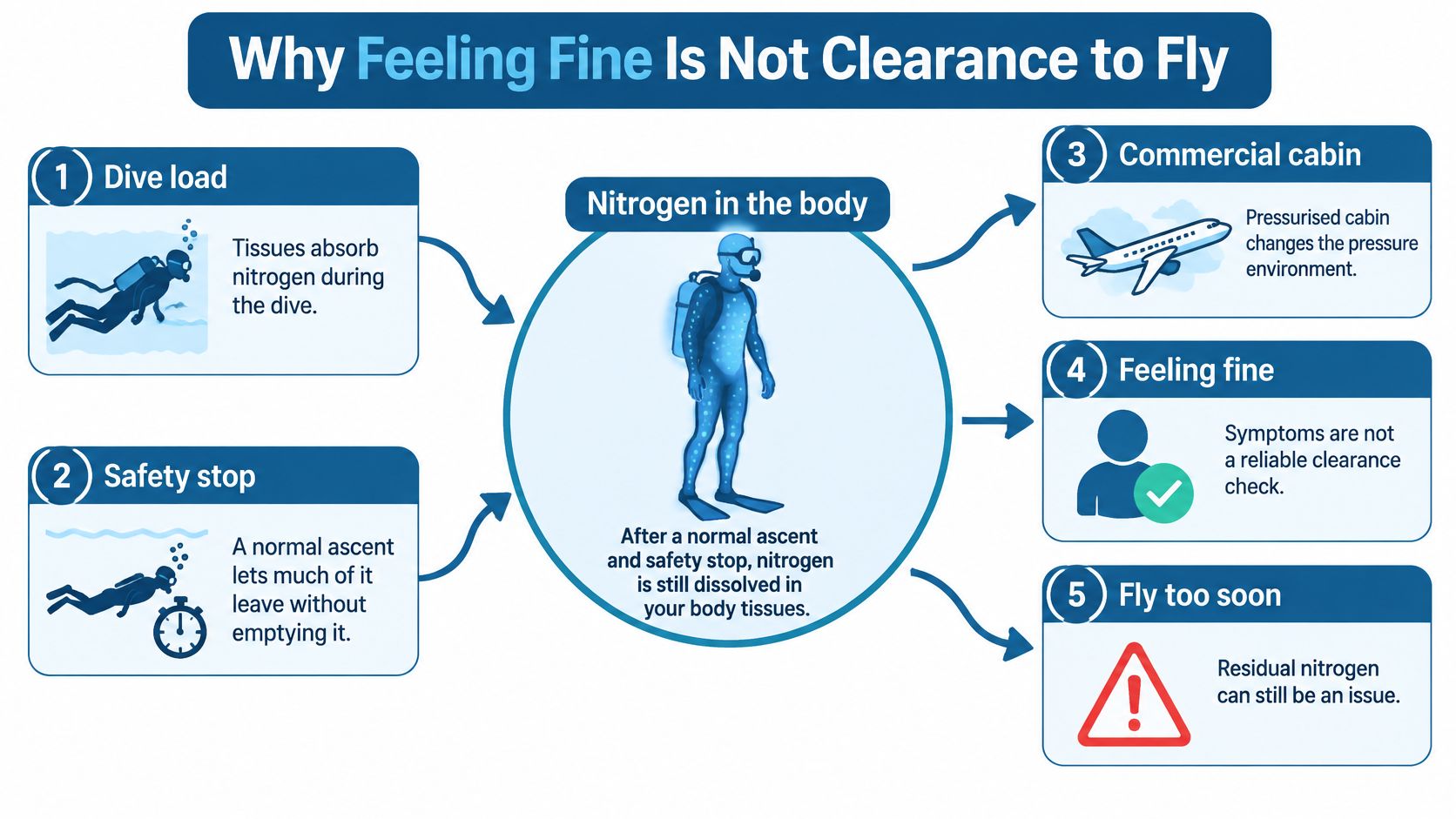
But what if you feel perfectly fine after diving?
This is one of the biggest misunderstandings I think divers need to be careful about. Feeling fine when you get out of the water doesn’t mean your body has finished eliminating the extra nitrogen.
You could have had a perfectly enjoyable dive, a nice lunch afterward and absolutely no obvious problems. That still doesn’t mean you should get straight onto a plane.
Shallow dives count too. Your depth and time underwater affect nitrogen absorption, but a shallow dive isn’t an automatic exemption from no-fly recommendations. As the clinical review of flying after diving discusses, recommended intervals help manage risk rather than switch it off entirely.
For a wider introduction to diving safety, I’ve also written about whether scuba diving is dangerous and the basic scuba diving principles every diver should understand.
Not sure where to dive in the Philippines?
I put this quiz together from my own dives across the islands, from the thresher sharks in Malapascua to the Moalboal sardine run and the macro sites around Dauin. Answer seven quick questions and I’ll point you to the destination that actually fits you.
Find your dive match →How I Plan My Last Dive Before Flying
I always start with my flight departure time and work backwards. Then I check which diving days I can fit into the trip without cutting the surface interval too close.
I’ve definitely skipped a final day of diving because of flight timing. It’s frustrating when you’re somewhere with great dive sites, especially in the Philippines, but I would rather miss one last dive than take an unnecessary risk.
Here’s how I normally plan it:
Check my flight time. I look at the actual departure time, not just whether the flight is the next morning or evening.
Look at the diving I’ve planned. Multiple dives and several consecutive diving days mean I need to use the appropriate minimum interval, not the single-dive recommendation.
Leave an extra buffer where possible. My preference is 24 hours after a multi-day diving holiday.
- Check my dive computer. I make sure its no-fly indication has cleared and don’t shorten a longer recommended interval.
Keep the final day for something else. This is usually when I explore, relax, dry my equipment and pack.
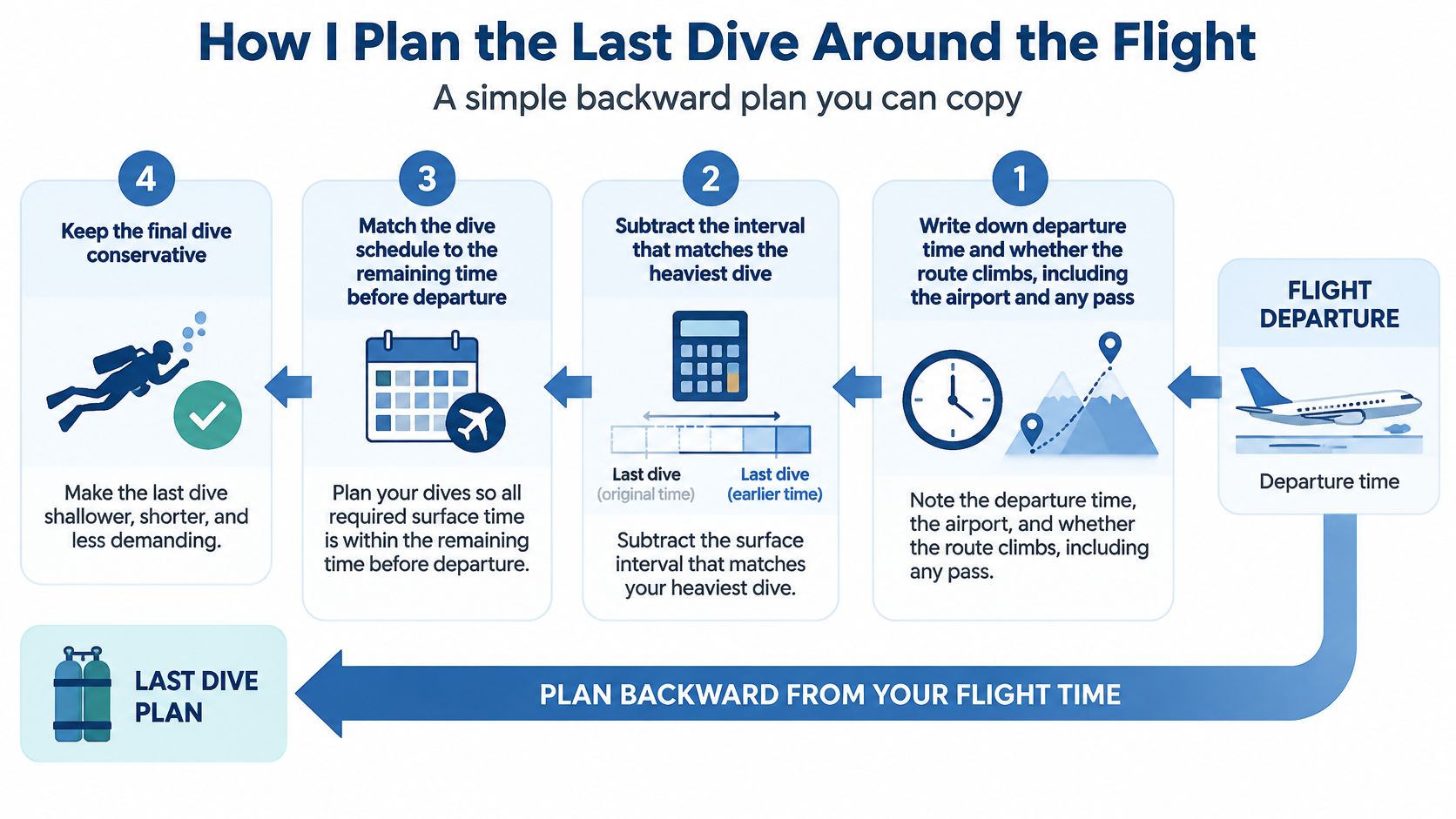
For example, if I’m flying tomorrow afternoon, I don’t automatically assume that a dive this afternoon is a good idea. I check when I’d actually surface, how many dives I’ve already done and whether that leaves the margin I want.
Also remember that getting to the airport can involve an increase in altitude before your flight. The CDC highlights altitude exposure above about 610 metres (2,000 feet), so a mountain drive or high-altitude airport can matter as well. If that’s part of your route, check it when planning your last dive.
Pro tip: If you have a choice, put your biggest diving days earlier in the holiday. That gives you a more relaxed finish without trying to squeeze in a final boat trip before heading home.
What Do I Do on My Last Day Instead of Diving?
Usually, I go snorkelling at the surface, spend time at the beach or explore the destination. The Philippines, for example, has so much to see above water too, including waterfalls, beautiful coastlines and island tours.
And honestly, after several days of getting up early for dives, I don’t mind having a slower final day!
It’s also my chance to rinse and dry my equipment and get everything packed. If you’ve ever tried squeezing a damp wetsuit into your suitcase, you’ll understand why having extra drying time is a good thing.
Just be mindful that relaxed surface snorkelling is not the same as doing repetitive deep breath-hold dives. If you’re planning freediving after scuba, ask a qualified instructor or diving medical professional about appropriate intervals.
You might also find my dive-trip packing guide helpful, especially if you’re travelling with your own equipment.
Planning the full Philippines dive circuit?
The Philippines Dive Circuit Itinerary covers Malapascua, Siquijor, and Bohol with day-by-day planning, dive site breakdowns, transfer logistics, accommodation picks and packing lists.
Everything in one place so you can stop researching and start diving.
Get the itinerary →
When You Need to Be More Careful About Flying
The usual 12- and 18-hour recommendations are for no-decompression recreational dives. Some situations need a more cautious approach.
Dives that required decompression stops
If you’ve done a dive requiring mandatory decompression stops, don’t treat it like an ordinary shallow reef dive. The CDC recommends 24 to 48 hours after these dives, and DAN advises a substantially longer interval than 18 hours because the evidence is more limited.
Technical diving, including dives involving helium-based gas mixtures, also calls for profile-specific planning and expert guidance.
Higher-altitude travel
Flying isn’t the only way to be exposed to lower atmospheric pressure after diving. Travelling up into the mountains can also matter.
If your plans include driving to a high-elevation location after a coastal dive, don’t assume the no-fly guidance is irrelevant just because you’re staying on the ground.
Symptoms after diving
This is the most important exception: if you develop symptoms that could indicate decompression illness, don’t simply wait until your no-fly timer ends.
Unusual joint pain, numbness, weakness, dizziness, difficulty walking, confusion, breathing difficulties or other unexplained symptoms after diving need prompt medical assessment. The medical guidance on altitude exposure and diving symptoms treats suspected decompression illness as a medical issue. Don’t board a flight with suspected decompression sickness. Contact emergency medical services or a diving-medicine service such as DAN for guidance.
I would never gamble on feeling better by the time the plane takes off.
Frequently Asked Questions About Scuba Diving and Flying
Here are some common questions about flying after scuba diving, including how long to wait before your flight and what you need to know to stay safe.
Can I fly 12 hours after scuba diving?
The 12-hour minimum applies to a single no-decompression dive, according to DAN and CDC guidance. If you’ve done more than one dive or have been diving over several days, the recommended minimum is at least 18 hours. Longer waits provide an additional safety margin.
Is 18 hours enough after multiple dives?
At least 18 hours is the published minimum for repetitive or multi-day no-decompression recreational diving, but it isn’t a guarantee of zero risk. Personally, I prefer 24 hours whenever my itinerary allows, and I follow a longer interval if my computer or dive circumstances call for one.
Do I need to wait 24 hours before flying after diving?
Not every recreational dive requires 24 hours under current guidance. However, I like having that extra buffer, especially after several days of diving. Dives with mandatory decompression stops need more conservative planning.
Can I snorkel the day before flying?
For my last day, I usually stick to relaxed snorkelling at the surface rather than scuba diving. Repeated deep breath-hold diving is a different activity and shouldn’t automatically be treated the same way, especially after recent scuba dives.
What if my dive computer says I can fly sooner?
I wouldn’t use a shorter computer countdown as a reason to ignore the applicable published guidance. Follow the longer interval. Your computer also can’t rule out decompression sickness if you have symptoms.
What if I already booked a dive too close to my flight?
I’d change or skip the dive rather than rush the interval. It may be disappointing, but a missed dive is better than risking a medical emergency on your journey home. These travel-planning tips may help if you need to rearrange your itinerary.
The Wrap Up: Scuba Diving and Flying
Whenever I plan a diving trip, I work backwards from my flight and make sure I’ve left enough time after my last dive. It has meant missing a final dive on some holidays, but that’s fine with me. There will always be another dive!
My advice is to enjoy your diving days, then give yourself a proper break before heading to the airport.
Spend that last day sightseeing, relaxing or simply enjoying the beach. There’s plenty to do on a diving holiday besides diving, after all! Safe travels!