10 Remarkable Benefits of SCUBA Diving for Women: How It Can Transform Your Life


The benefits of scuba diving for women go well beyond seeing beautiful reefs. I’ve been diving since 2013, and some of the things I value most now are the confidence I’ve built, the women I’ve met and, perhaps surprisingly, the peace of simply being underwater.
I’ve enjoyed diving with women-led teams in Roatán and Cozumel, explored wrecks in several countries and occasionally even dive in a 15-metre-deep pool in Luxembourg just because I love the feeling of being underwater. Not every benefit has to involve sharks or a spectacular dive site!
If you’re thinking of learning to dive, here are ten benefits I’ve experienced or seen through the women I’ve met, along with a few practical things worth knowing. Let’s dive in!
1. Confidence Boost
You don’t have to be a naturally confident person to become a confident diver. For me, it came from gradually getting comfortable with the skills.
I still remember that wonderful feeling when I finally had my buoyancy under control. I knew how much weight I needed depending on my wetsuit, how to manage my gas consumption more efficiently and how to stay neutrally buoyant without constantly sinking or floating upwards.
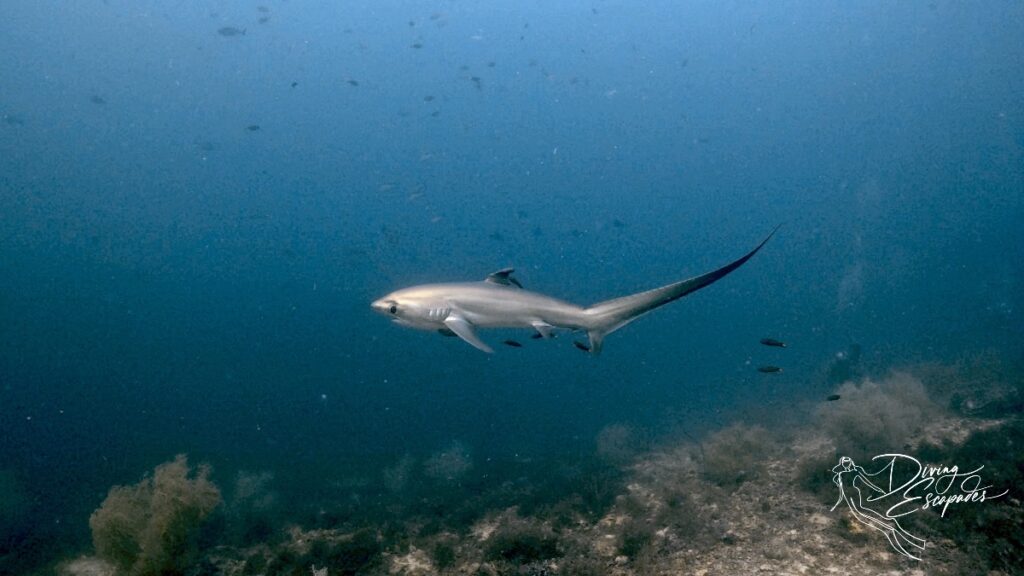
That confidence really paid off in Malapascua in the Philippines. I did a check dive the day before my thresher shark dive to get comfortable with my gear, weighting and conditions.
When the big dive came around, I could focus on enjoying the sharks and taking photos and video rather than worrying about my equipment.
PRO TIP: If you’re diving somewhere new, especially before a dive you’re excited about, ask whether you can do a check dive first. It’s a good opportunity to sort out your weighting and get comfortable with the equipment and conditions.
2. Enhanced Physical Fitness
You do use your body when you dive, although I wouldn’t treat scuba diving as a replacement for regular exercise.
Getting into and out of the water, moving equipment and finning can be physically demanding, especially when conditions are less than ideal. Divers Alert Network (DAN) points out that diving alone isn’t enough to maintain overall fitness, so swimming, strength training and other exercise still matter.
You don’t need to be an athlete to get started, but it helps to be comfortable in the water and have the fitness to manage the type of dive you’re planning. If you have a health concern, complete the appropriate dive medical screening and seek professional advice where indicated.
I think the better benefit here is motivation: when there’s a dive trip to look forward to, you have a very practical reason to keep yourself fit!
3. Connection with Nature
You see marine life differently when you’re underwater with it instead of looking at photographs.
I love getting close enough to observe marine creatures without disturbing them, especially when I can photograph their behaviour. It’s one of the reasons diving has kept my attention for so many years.
That connection also comes with responsibility. Keep good buoyancy, give animals space, and never touch or chase them for a photograph. A beautiful encounter isn’t worth damaging the habitat or stressing the wildlife.


4. Mindfulness and Relaxation
You might be surprised by how relaxing diving can feel once you’re comfortable with your skills and the conditions.
This is probably the benefit that matters most to me these days. For me, diving feels almost like meditation. I focus on my breathing, enjoy the quiet and just observe what’s around me.
Believe it or not, I occasionally go diving with my local club in a 15-metre-deep swimming pool here in Luxembourg. There’s no spectacular marine life to see. I go simply because I enjoy being underwater and feeling neutrally buoyant.
There is some research behind the idea that diving may help with stress. A small 2017 exploratory study published in Frontiers in Psychology reported lower perceived stress after a recreational diving course. But it was a limited study, so it’s not proof that scuba diving treats stress or mental health conditions.
And, of course, not every dive is relaxing. A difficult entry, strong current or unfamiliar equipment can make it stressful instead. Choosing a suitable dive and knowing your limits still matters.
5. Sense of Adventure
If you enjoy exploring, scuba diving gives you access to places and perspectives you wouldn’t see from the surface.
My first wreck dive was in April 2014, shortly after earning my Advanced Open Water certification in Brisbane. I dived the ex-HMAS Brisbane, a 133-metre former Australian naval destroyer deliberately sunk as an artificial reef off Queensland’s Sunshine Coast.
Since then, I’ve also dived the Sea Tiger wreck in Oahu, the Angelika wreck in Northern Sardinia and the El Capitan wreck in Subic Bay in the Philippines. I’ve entered several wrecks, and I’ve enjoyed underwater swim-throughs and easier cave-like formations, including Sifone Cave in Northern Sardinia.
But I haven’t trained for technical cave diving, and I wouldn’t describe those swim-throughs as exploring full cave systems. Overhead environments and wreck penetration require appropriate training, equipment and planning; a route that looks inviting isn’t automatically a suitable one. Queensland Parks’ dive advice for the ex-HMAS Brisbane stresses choosing dives appropriate to your certification and experience.
6. Empowerment
Sometimes feeling empowered means doing something new. Other times, it means being confident enough to say, “Not this time.”
The El Capitan wreck in Subic Bay taught me that lesson. We had discussed an entry and penetration route during the briefing, but after going inside, the visibility deteriorated so badly that we could barely see anything through the silt.
After just a few metres, we turned around and exited rather than pushing on with the original route. We later explored other sections where conditions were better, including an unusual air pocket inside the wreck, with barnacle-covered surfaces and surprisingly clear water in that section.
What stayed with me wasn’t just the experience. It was the reminder that a dive plan is something you can change when conditions change. To me, being a confident diver means making sensible decisions, not forcing yourself to continue just to prove you can.
PRO TIP: Agree on your limits and turn-around signals before a dive. If visibility or conditions deteriorate, communicate with your buddy and follow the appropriate procedure for ending or changing the dive. Don’t treat an overhead exit as something you can improvise.
7. Camaraderie and Community

You can meet some genuinely inspiring people through diving, including women who are doing fantastic things in the industry.
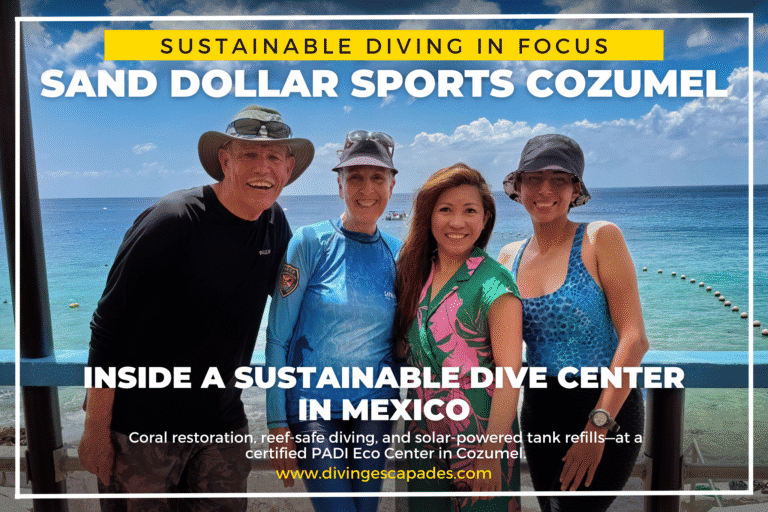
In Roatán, Honduras, I met Natalie Shuman of Sun Divers and dived with her wonderful team of women. In Cozumel, Mexico, I dived with Christina Mota and Catherine Hoelzer of Sand Dollar Sports.
I’ve also interviewed Fabiana Loureiro, a scuba diving instructor from Luxembourg, and Helene-Julie Zofia Paamand, an ocean advocate. And I’ve met plenty of other women divers and instructors in Italy, the Philippines and Australia.
I appreciate the perspectives they bring. In my experience, some female dive professionals are particularly attuned to concerns women beginners may have. That’s not to say only women can be thoughtful instructors, of course. What matters most is having someone who listens, respects your comfort level and teaches you well.
If you’re nervous about starting, finding an instructor or dive group you feel comfortable with can make a big difference.

8. Environmental Awareness
When you spend time underwater, it’s hard not to notice the impact our rubbish can have on the sea.
These days I always carry my TRSHBG on dives. If I see rubbish, I collect what I safely can and bring it to the surface. My motto is to leave a place better than we found it.
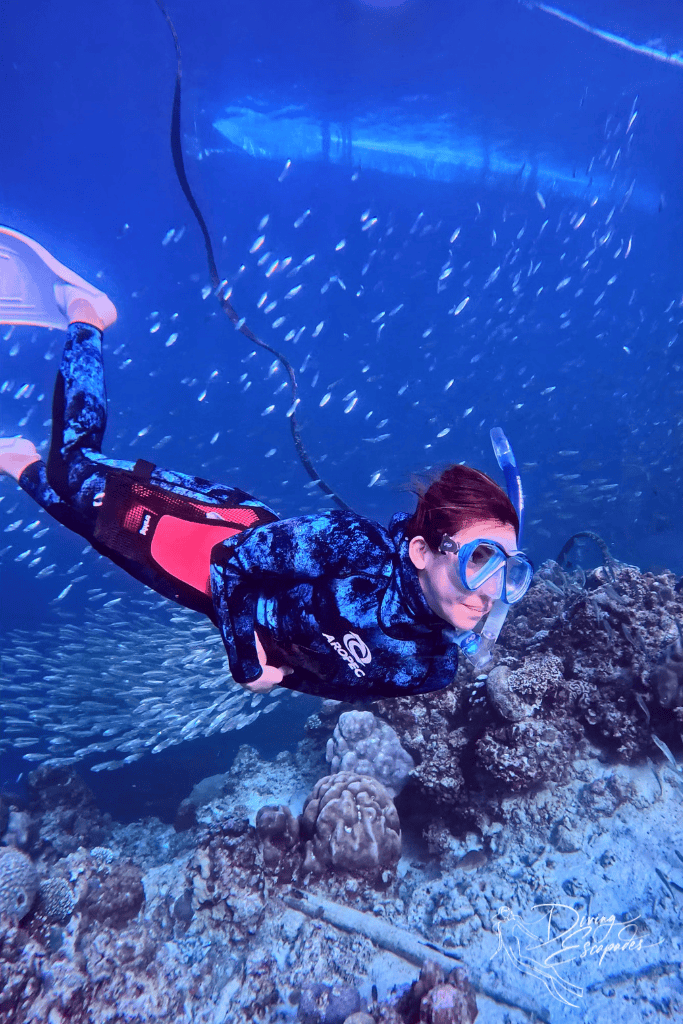
That doesn’t mean picking up everything you see. Avoid sharp objects, entanglement hazards or anything that could compromise your buoyancy or safety. If an item is risky to remove, tell the operator instead.
You can also help simply by diving responsibly, keeping your fins away from the reef and choosing operators who respect marine life.
9. Creative Expression
If you enjoy photography or video, diving gives you a completely different world to document.
Underwater photography is a big part of why I love diving. It encourages me to slow down, observe marine creatures and pay attention to their behaviour rather than just swimming past them.
I enjoy sharing those moments through photos, videos and this blog. But the camera should never take priority over your buoyancy, gas supply, buddy or the wildlife itself.
PRO TIP: If you’re still working on buoyancy control, practise that first before concentrating on underwater photography. You’ll enjoy taking photos much more when managing your equipment feels natural.
10. Personal Growth
You don’t have to achieve something dramatic on every dive to notice how much you’ve learned over time.
For me, personal growth shows up in small ways: knowing my equipment, understanding my weighting, making decisions when plans change and enjoying dives without constantly worrying about the basics.
I still love sharks, wrecks and interesting marine life. But I’m just as happy to spend time in a pool enjoying the peace of being underwater. That’s something I didn’t necessarily expect when I first learned to dive.
It’s also worth remembering that diving isn’t about competing with anyone else. Taking extra training, choosing an easier site or calling off a dive can all be signs of good judgment.
Frequently Asked Questions About Scuba Diving for Women
If you’re considering your first scuba course, these are a few practical questions worth asking before you book.
Do women need special scuba diving training?
No separate women’s certification is required. What matters is taking a suitable course with a qualified instructor, completing the medical screening and learning the skills needed to dive safely.
What if I’m nervous about learning to scuba dive?
That’s a good reason to speak to your instructor before the course, not a reason to give up. Ask how the training progresses, whether you can practise skills at a comfortable pace and what happens if you need extra time.
Is scuba diving a good workout?
It can involve physical effort, particularly while moving gear, entering and exiting the water or dealing with currents. But DAN advises maintaining fitness outside scuba diving, rather than relying on diving alone as your exercise routine.
Can I try scuba diving without committing to a full certification course?
Many dive centres offer supervised introductory experiences. Ask the operator about prerequisites, medical screening, instructor supervision and what the experience includes. An introductory dive is not the same as a certification allowing you to dive independently with a buddy.
What would you recommend to a woman planning her first dive trip?
Choose a welcoming, safety-conscious operator, tell them your actual experience level and ask about site conditions and equipment sizing. If it’s been a while since your last dive, a refresher or check dive can help you get comfortable before more ambitious dives.
The Wrap Up: Benefits of Scuba Diving for Women
If you’re thinking of trying scuba diving, I hope these experiences show that the rewards aren’t only about seeing sharks or exploring wrecks. You might find that learning new skills, meeting other divers or simply being underwater is what stays with you.
For me, confidence came gradually, and the greatest benefit today is still that sense of peace. I’ve also learned that being capable underwater includes knowing when to change a plan or end a dive.
Start with a good instructor, choose dives that match your experience and give yourself time to enjoy learning. Happy diving!