PADI Open Water Cost: What You’ll Really Pay in 2027

How much does a PADI Open Water cost in 2027? Depending on where you learn, you could pay a few hundred dollars or considerably more, and the price on the dive centre’s website doesn’t always tell you what’s included.
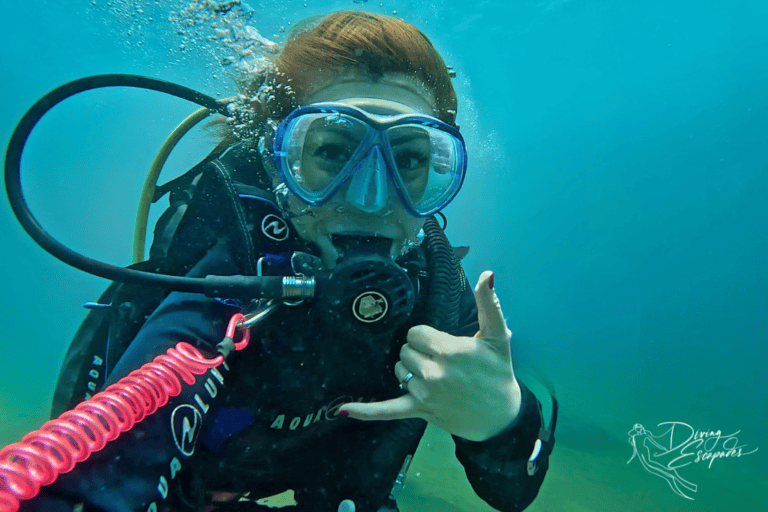
I paid around $450 AUD when I got certified in Brisbane back in 2013, although that was quite a while ago! I still remember the textbooks, classroom lessons, pool sessions and open water dives packed into about five days.
It was intense, but I loved it.
Since then, I’ve dived in Australia, the Philippines and across Europe, and I’ve learned that a cheaper course isn’t necessarily better value.
So, what should you actually budget, and which extras should you ask about before booking? Here’s what I’d look for if I were signing up again today. Let’s dive in!
How Much Does a PADI Open Water Course Cost in 2027?
There isn’t one fixed price for a PADI Open Water course. Dive centres set their own rates, and prices can vary even within the same city.
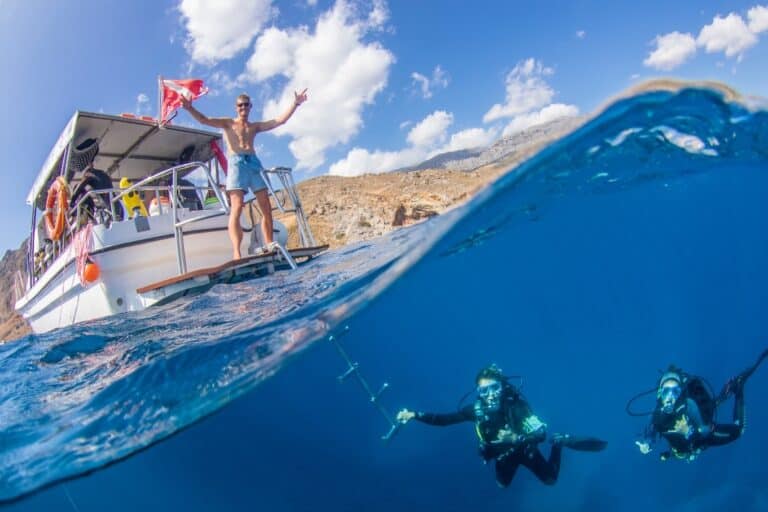
The training also isn’t identical from a logistical point of view: some centres use shore-entry sites, while others take you out by boat.
To give you an idea, here are examples of published prices rather than a promise of what every dive centre in a country will charge.
| Location | Example advertised price | What you should know |
|---|---|---|
| USA | Around US$479-500 at selected centres | Check the inclusions carefully, especially boat trips and personal gear |
| Brisbane, Australia | AUD 799 at one Brisbane operator | Current advertised example, not a nationwide average |
| Europe | Around €400-625 at selected destinations | Rates depend on whether eLearning is included and on local diving arrangements |
| Cebu, Philippines | Around PHP 14,000-25,000 in selected listings | Confirm what is included, the training schedule and any minimum group size |
| Brisbane, Australia, in 2013 | Around AUD 450, which is what I remember paying | My historical price, not a 2027 quote |
For reference, you can look at the current listings from Pure Dive in Brisbane, Sugar Land Dive Center in the USA, and PADI’s course information. Prices and inclusions can change, so always check directly with the operator.

Is it cheaper to learn in the Philippines?
Often, yes, especially compared with many Australian and European centres. But I wouldn’t book a flight to the Philippines just to save money on a certification course.
If you’re already going on holiday there, it’s worth considering. You can combine the training with a few days somewhere you actually want to spend time, and once you’re certified, you might even have time for a fun dive or two.
Just remember to factor in flights, hotels, transfers and meals. A cheaper course isn’t much of a bargain if you spend far more getting there.
If you’re deciding where to go, my scuba diving in the Philippines guide covers some of the destinations I’ve dived myself.
PRO TIP: Ask whether your course dives are from shore or by boat. If a boat is required, make sure the advertised price already includes it.
What’s Included in the PADI Open Water Course Price?
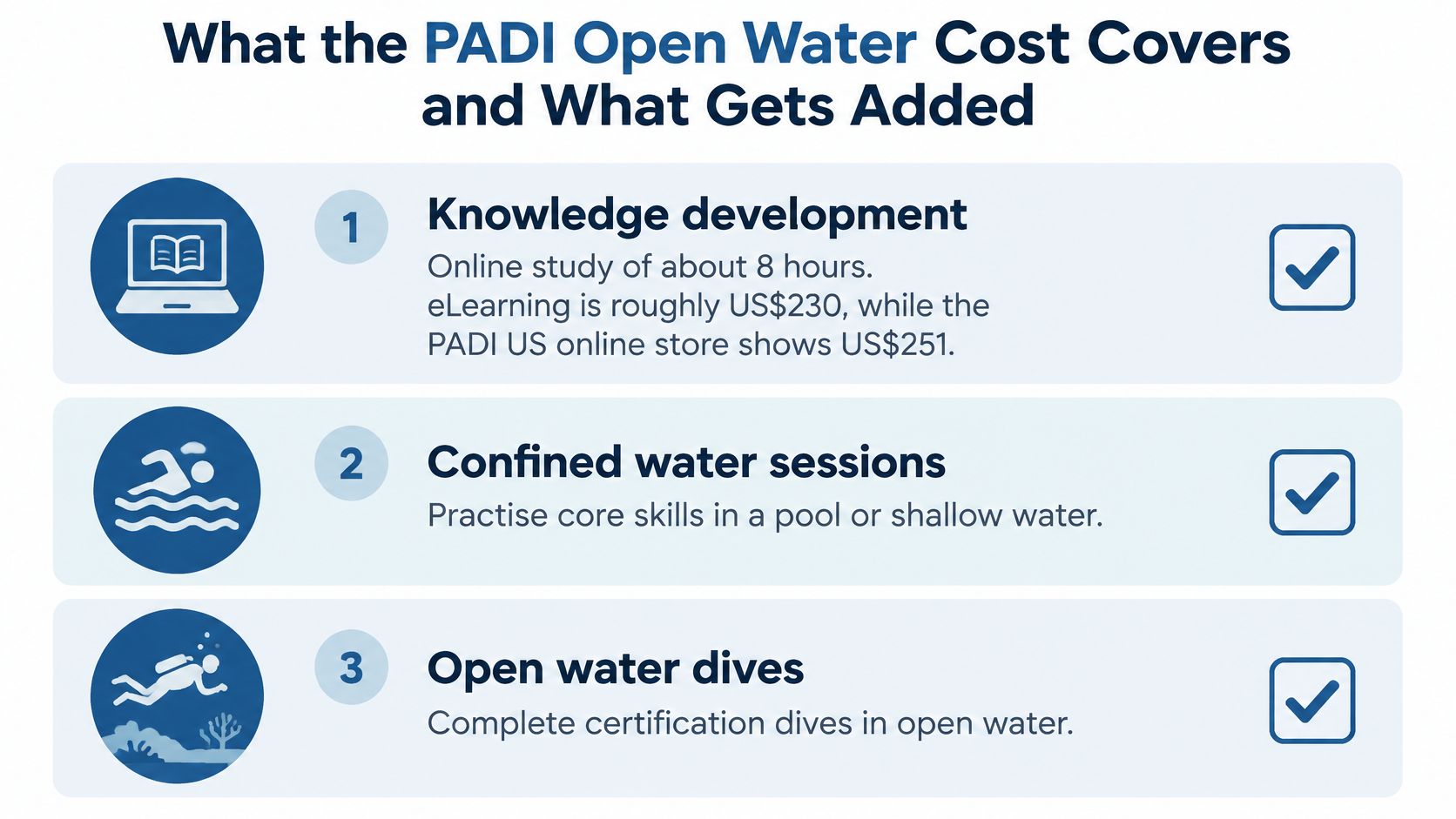
A standard PADI Open Water course has three main parts: knowledge development, confined-water training (usually in a swimming pool or pool-like environment), and four open water training dives.
When I learned in Brisbane in 2013, we had printed books, face-to-face lessons and written tests. These days, many students do the theory through eLearning before meeting their instructor.
Either way, you’ll still need to practise the actual skills in the water.
Here are the things I’d check before paying a deposit.
| Item | What to ask the dive centre |
|---|---|
| PADI eLearning or course materials | Is it included, or do I buy it separately? |
| Confined-water training | Are all training sessions and any necessary additional practice included? |
| Four open water dives | Are boat fees, tanks and weights included? |
| Rental equipment | Does the fee cover the BCD, regulator, wetsuit and other required equipment? |
| Mask, snorkel and fins | Can I rent these, or am I expected to bring or buy my own? |
| Certification | Is the certification processing fee included? |
| Park or site fees | Are there additional access or environmental fees? |
| Transfers and meals | Are transport and lunch part of the package? |
Watch out for separately priced eLearning
PADI explains that you can buy the eLearning first and complete the practical training with a participating dive centre. Its US online store currently lists Open Water Diver eLearning at US$251, but regional pricing and centre packages can differ.
Before buying eLearning on your own, contact the dive centre you’ve chosen. Some courses already include it, so you don’t want to end up paying twice or purchasing the wrong option.
And if a dive centre advertises a surprisingly low price, check whether that figure covers the entire course or just one part of it. I’ve seen listings where the materials or certification are extra.
Do you need to buy scuba gear before the course?
Personally, I wouldn’t rush to buy a complete set of equipment. You haven’t even had a chance to find out what you like yet!
A BCD, regulator, wetsuit and dive computer can be a significant investment. I’d rent the main equipment while learning, then decide what to buy once you’re certified and know you’ll be diving regularly.
You may still need your own mask, snorkel or fins, depending on the dive centre. Ask before arriving. My dive-trip packing guide can help you think through what you actually need.
PRO TIP: Ask what happens if you need an extra pool session or don’t complete a skill on the first attempt. You want to know whether additional instruction will cost extra, without feeling pressured to rush.
Why Do Open Water Courses Cost More in Some Places?
A higher price doesn’t automatically mean better instruction, and a cheaper course doesn’t automatically mean something is wrong.
A local diving club might train in a nearby lake. A resort in Southeast Asia might conduct its open water dives on warm tropical reefs. Both can provide proper training, but they’ll have different running costs and different experiences outside the classroom.
According to PADI’s certification FAQ, independently operated centres set their own prices based on factors such as location and class size.
Here’s what I’d compare beyond the price:
Class size: How many students will one instructor be teaching?
Training schedule: Will you have enough time to learn and practise, rather than feeling rushed?
Equipment: Is the rental equipment well maintained and available in your size?
Dive location: Will training take place from shore, a boat, or both?
Extra fees: Are all compulsory charges explained clearly?
Flexibility: What happens if weather delays the course or you need more practice?
I’ve visited plenty of dive centres over the years, and I pay attention to how the crew communicates and how they treat the marine environment.
That matters to me just as much as the location. If you want an example of the things I look for in an operator, read my experiences with Sun Divers in Roatán and Dive2gether in Crete.
Is the Cheapest PADI Open Water Course Worth It?
Sometimes! A lower price can simply mean that a centre has a more straightforward setup or doesn’t need to run a boat for every dive.
But I’d be careful about choosing a course based on price alone. You’re learning skills you may need to rely on in an unfamiliar underwater environment, so this isn’t the part of your holiday I’d try to cut corners on.
I remember how intense my own course was in Brisbane. It took about five days, and there was a lot to learn.
We practised skills in the pool, completed the theory and then put everything into practice during our open water dives. I was tired by the end, but also so excited to continue diving!
What made it worthwhile wasn’t simply getting the certification card. It was finishing the training feeling ready to go diving again.
If you’re nervous about a particular skill, such as clearing your mask, you want an instructor who will give you time and help you work through it. Being rushed underwater is no fun.
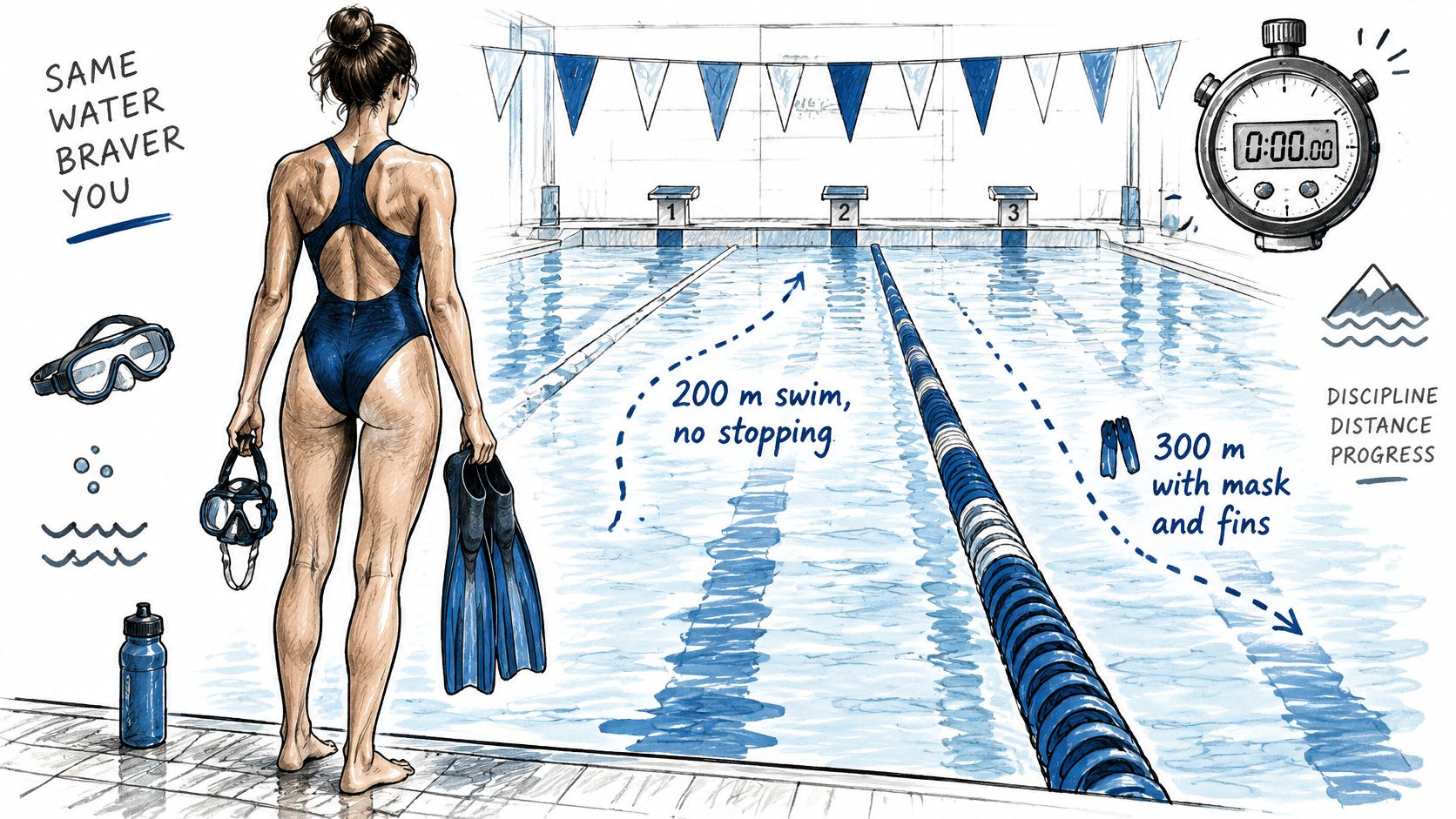
It’s also worth checking that you meet the course’s water skills and medical requirements before booking. PADI’s beginner guidance describes the swimming and floating assessments involved in training.
PRO TIP: If you’re comparing a large group course with a smaller one, ask how much individual time you’ll get with the instructor. A slightly more expensive course may be worth it if you think you’ll benefit from more attention.
How to Compare Two Open Water Course Quotes
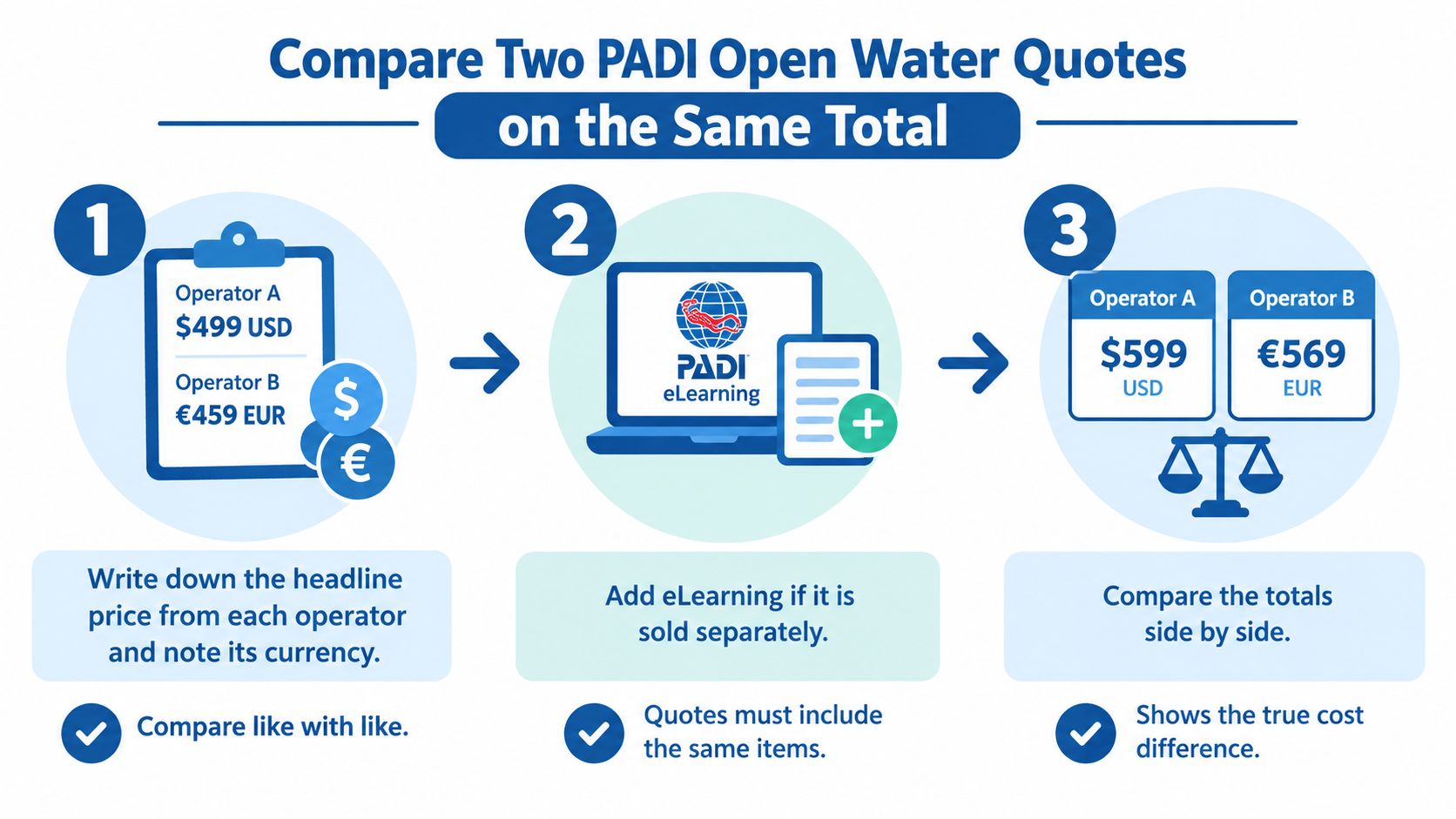
You don’t need a complicated spreadsheet. I’d simply email two or three dive centres and ask them for the total price to complete the certification.
Make sure you’re comparing the same thing: theory, confined-water training, four open water dives, equipment, certification and any compulsory fees.
You could send something like this:
Hi! I’m looking into your PADI Open Water course. Could you please confirm the total price, what’s included (eLearning, equipment, boat dives and certification), how many students are usually in a group, and what happens if I need extra practice or a dive is cancelled? Thank you!
Once you have the replies, you’ll have a much better idea of what you’re paying for. I also like to check recent reviews, but I’d pay particular attention to comments about the instructors, safety briefings and how beginners are treated.
If you’re planning a diving holiday on a budget, you might also find my underwater experiences on a budget guide useful.
PRO TIP: Don’t forget to ask about weather cancellations and rescheduling. If your training dives are delayed, you may need an extra night of accommodation or a change to your travel plans.
PADI Open Water Cost FAQs
Have questions about PADI Open Water cost? Here are answers to some of the most common questions to help you understand what’s included, avoid unexpected fees, and budget for your first scuba diving certification.
Sometimes, but not always. Many dive centres sell complete packages, while others price the eLearning and in-water sessions separately. Check with your chosen centre before purchasing anything.
PADI says that a typical course takes around three to five days, although the training is performance-based. You may take longer if you need more practice or if weather affects your scheduled dives.
No, not a full set. Many dive centres include rental equipment, though some ask students to bring their own mask, snorkel and fins. I’d rent while learning and buy gear later, once you know what suits you.
It often can be, but there are exceptions. Compare complete course packages, not just the advertised prices, and remember to include travel and accommodation if you’re going abroad specifically for the course.
No. If you complete the required training and earn the same PADI Open Water Diver certification, the price you paid doesn’t change the certification. What matters is that the operator provides proper training and that you’re comfortable with the instruction.
Tell your instructor. It’s normal to need more practice with some skills, and course completion is based on demonstrating them properly, not simply turning up for a set number of days. Ask about extra-session costs before booking so you’re not surprised later.

The Wrap Up: PADI Open Water Cost
When I think back to my Open Water course in Brisbane in 2013, I don’t really remember the $450 AUD I paid as much as I remember how much I enjoyed learning to dive. It was tiring, yes, but by the end I couldn’t wait to get back underwater.
If you’re comparing PADI Open Water costs today, my advice is to look for a complete package with an instructor you’re comfortable with. Ask about the extras, rent your gear while you’re learning and don’t choose a course just because it’s the cheapest one on the list.
And if you have the chance to learn somewhere beautiful while you’re on holiday, even better! Just make sure you’re choosing the dive centre for its training, not only the view from the boat. Safe travels!